The Luangwa River runs south through eastern Zambia in a broad, flat-floored valley, an arm of the great rift system that crosses the continent. The river loops and meanders, cuts new channels and leaves old bends behind as oxbow lagoons. On its terraces and in the woodland beyond them lives a giraffe found nowhere else: Thornicroft's giraffe.
The animal takes its name from Harry Scott Thornicroft, a colonial official in the region early in the twentieth century. Its whole wild range lies in the Luangwa Valley, mostly in and around South Luangwa National Park, with no natural population anywhere else. Numbers are small, generally put at somewhere in the hundreds, which makes every sighting count.
Recognising Thornicroft's giraffe
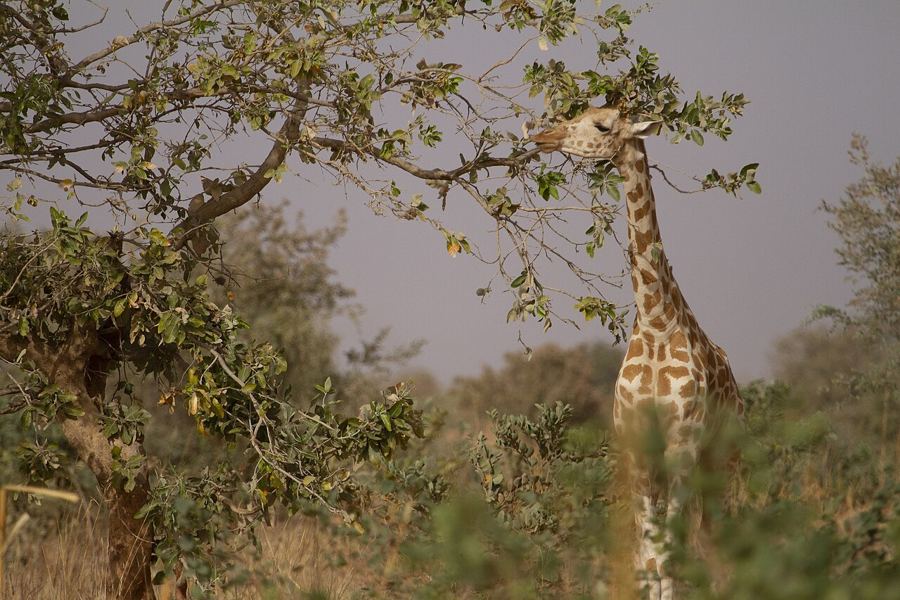
Thornicroft's giraffe look closest to the Masai giraffe of East Africa, and studies since 2016 that split the giraffe into four species group the two together; the IUCN still assesses one giraffe species with subspecies. The field marks:
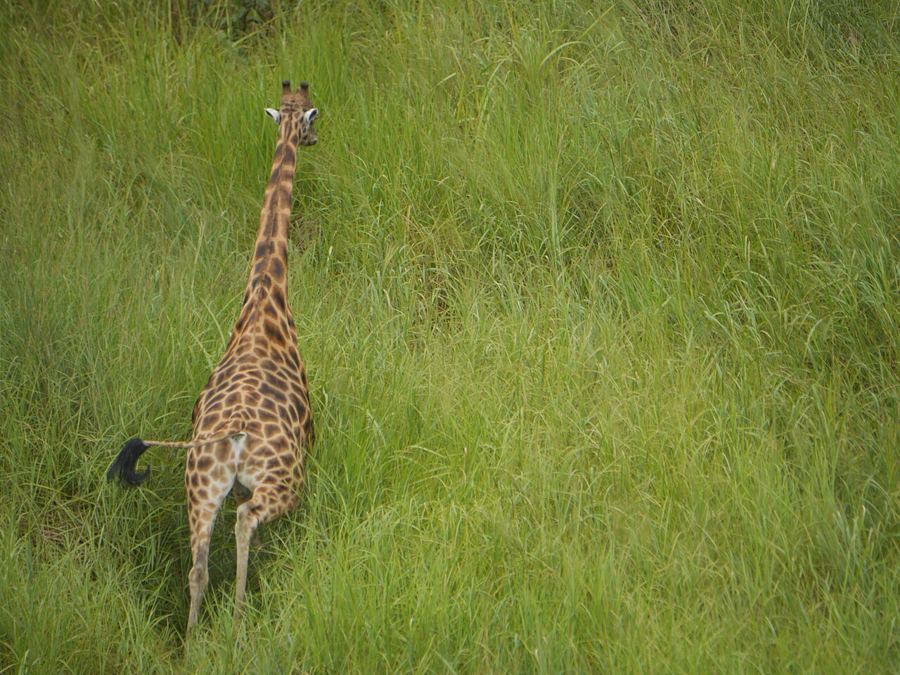
- Patches dark brown, irregular and often leaf- or star-shaped, with jagged edges.
- The pattern fades out on the lower legs, which look pale and plain.
- Pale lines between patches, wider and more uneven than the neat net of a reticulated giraffe.
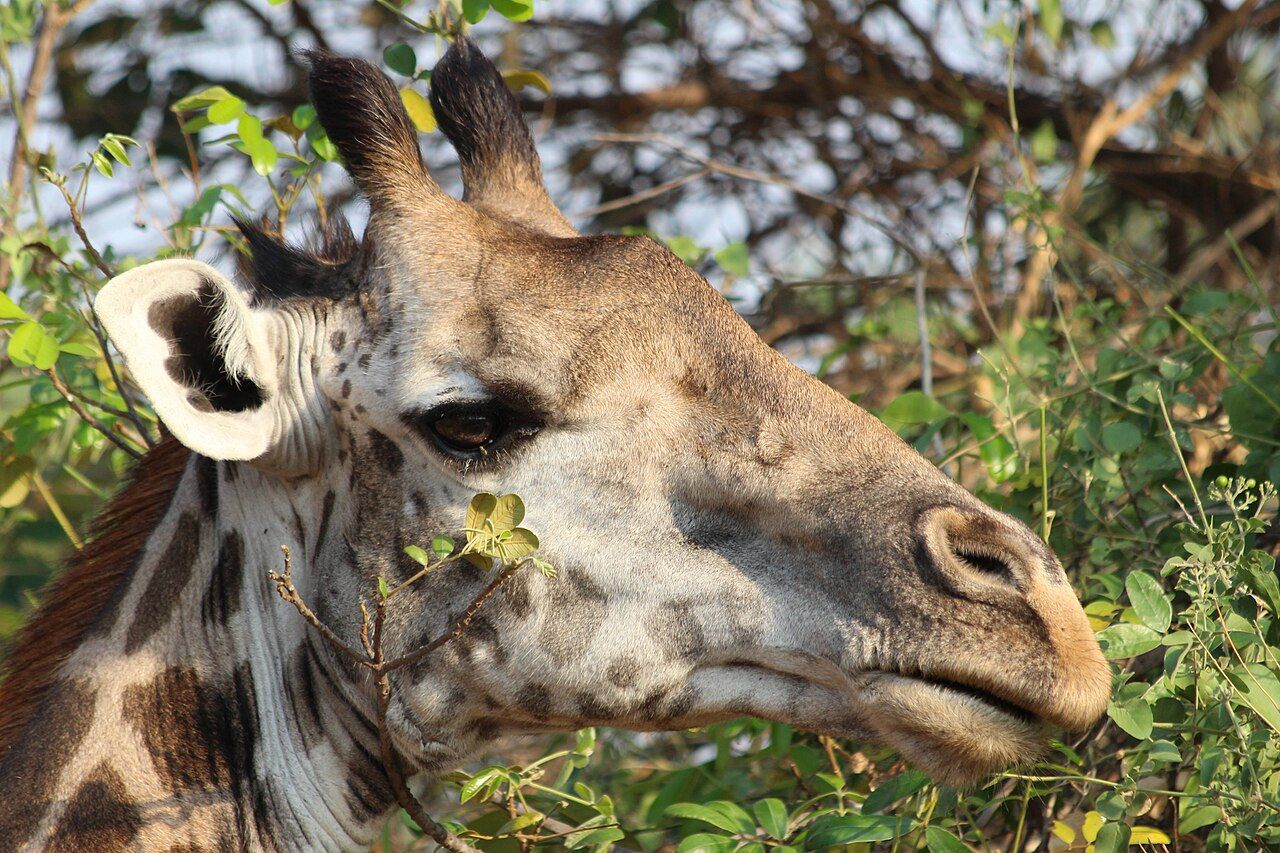
Bulls darken with age, as in other giraffe, and older males can look almost chocolate-coloured from a distance. Their ossicones, the bony horns, become worn bald at the tips from years of necking. Females and young keep the tufts of black hair on top. The wider family story and the four groups are explained in four giraffe species.
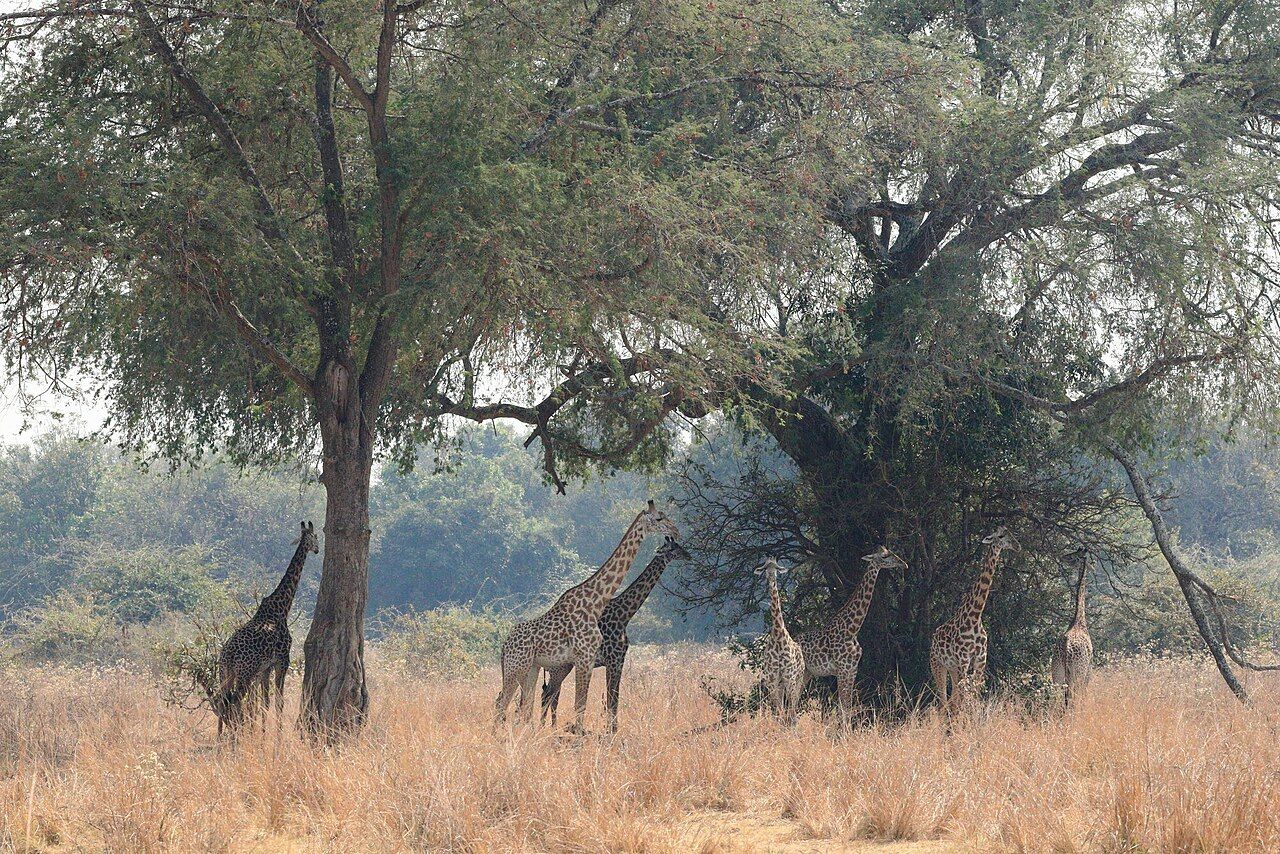
Telling individuals apart is easier than it sounds. No two giraffe share a coat pattern, and the patches on the neck and shoulder stay the same for life, which is how researchers in the valley follow particular animals over many years. Spend an hour with one group and you start to notice the differences yourself: a cow with a notch in one ear, a young bull with a pale blaze on his neck, a calf whose patches still look soft at the edges. Groups here are loose and change membership often, as they do across the giraffe's range. A cow may feed beside one set of companions in the morning and another by the afternoon, while bulls wander between groups checking the females. Calves sometimes gather in small nursery groups under the eye of one or two adults while the others browse further off.
The river and its lagoons
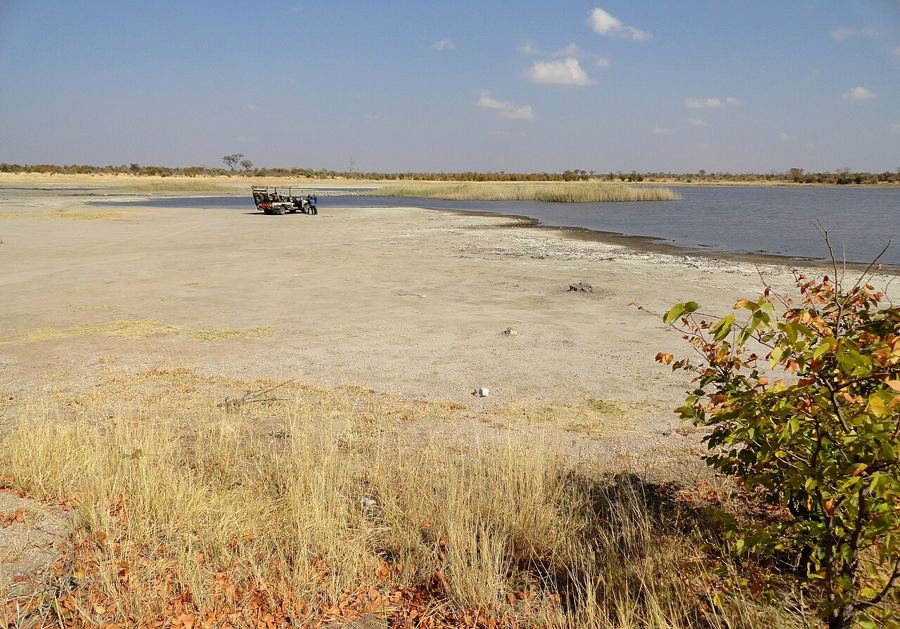
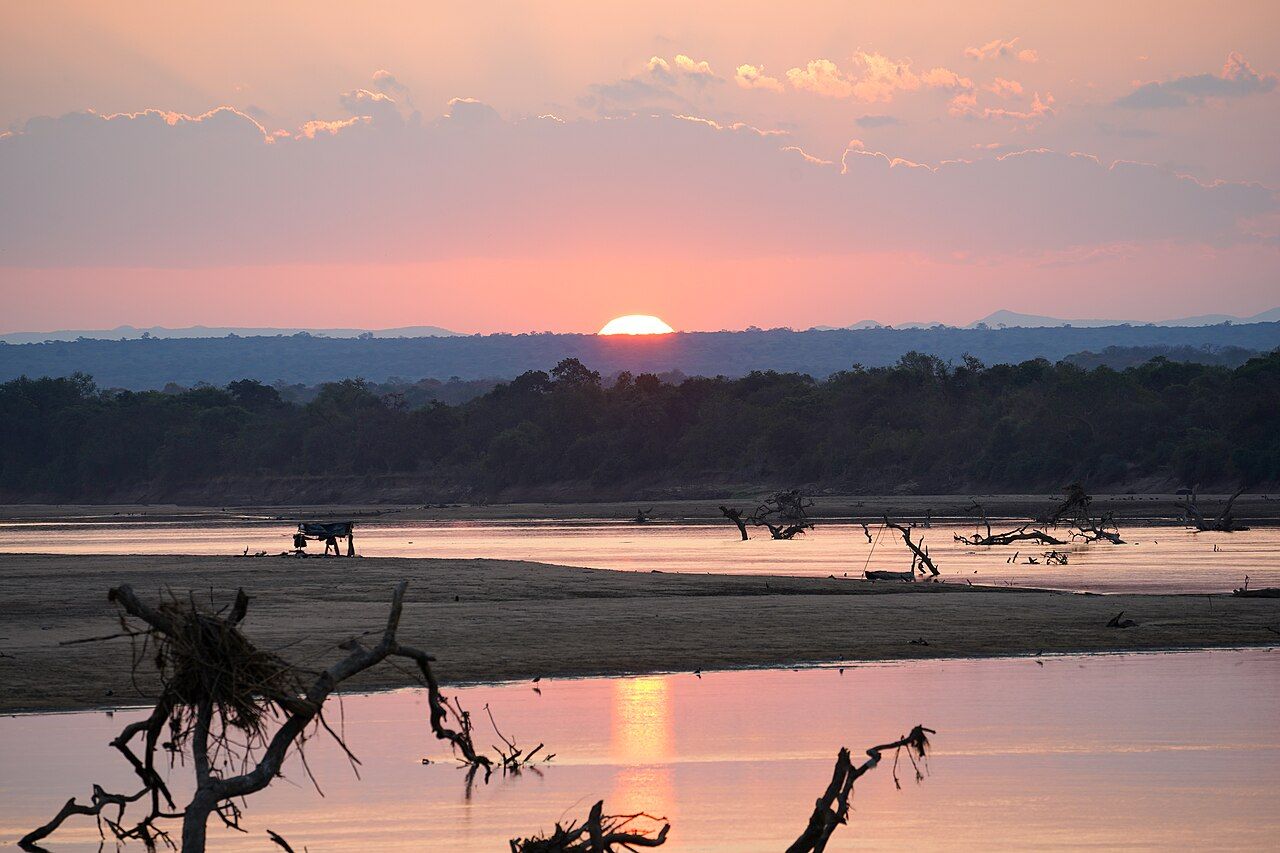
The Luangwa sets the pattern of life in the park. In the dry season the river shrinks to a wide, slow stream between high sandy banks, with sandbars where crocodiles bask and pods of hippos crowd the remaining pools. In the rains it fills from bank to bank, brown and fast, and spills into the lagoons.
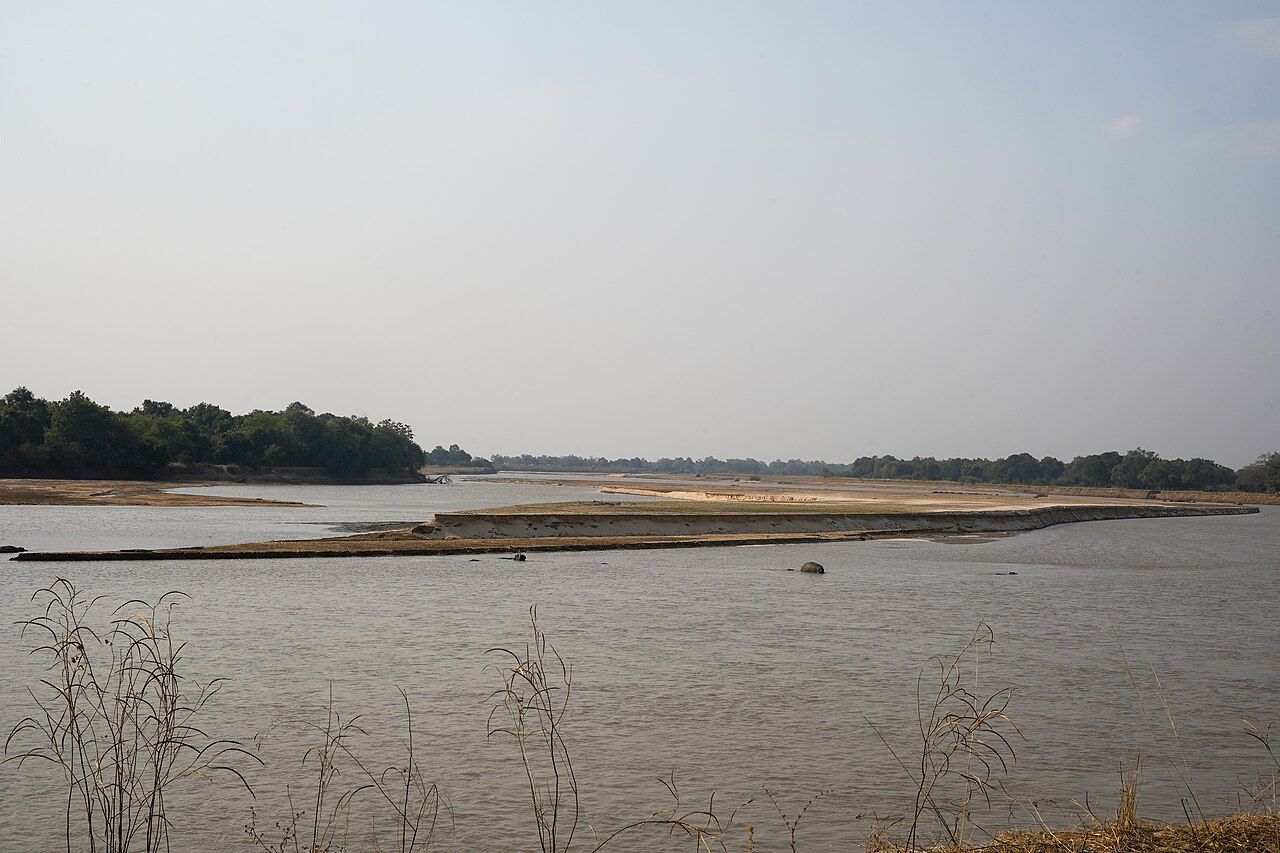
Back from the water, the land rises in terraces. Riverine woodland of ebony, mahogany and sausage trees gives way to mopane, open grassland and patches of thicket. Giraffe use all of it, browsing on acacias, combretum and other trees, and coming to the river and lagoons to drink in the dry months. They often stand in the open between groves, where the light catches their dark coats.
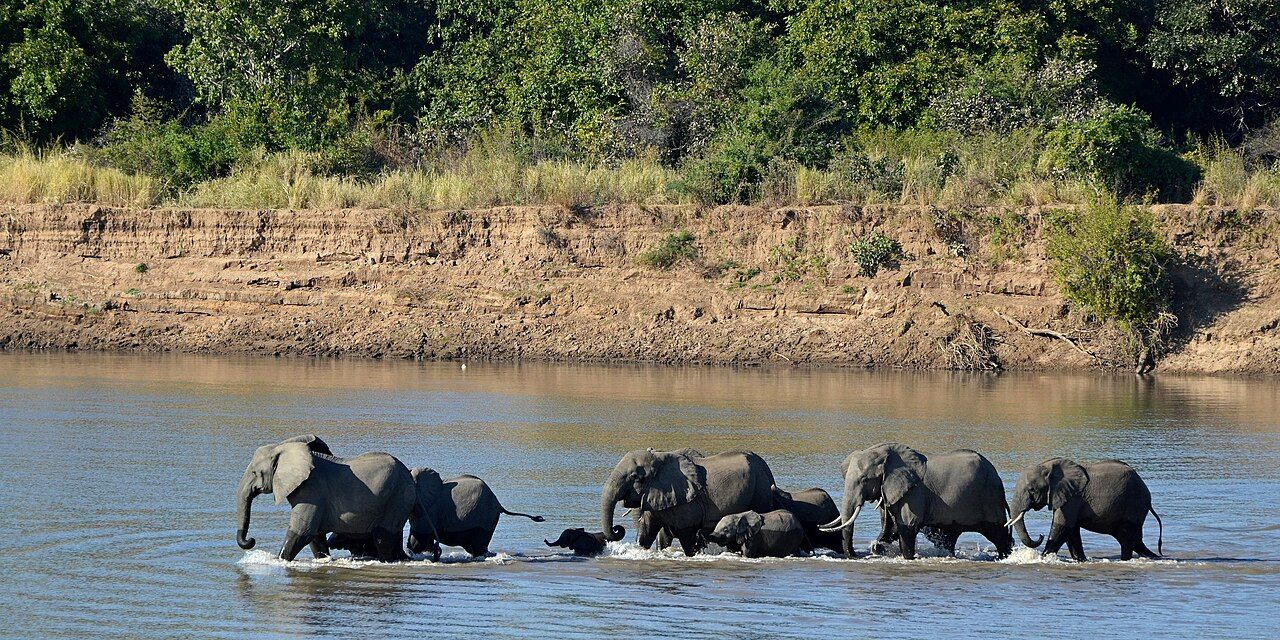
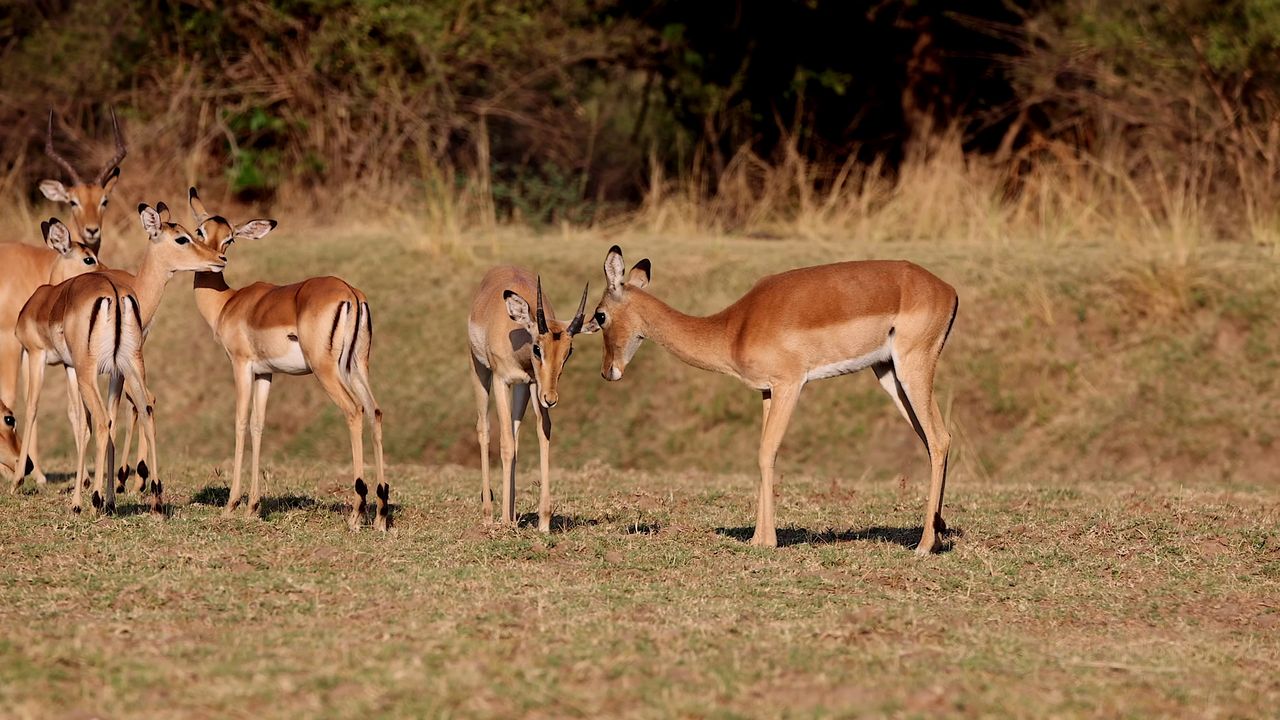
Elephants cross the river daily, wading in lines from bank to bank, and the valley is known for leopards, for large herds of buffalo, for Cookson's wildebeest further north and for Crawshay's zebra. Puku and impala graze the open terraces.
Walking in general
The Luangwa Valley is often described as one of the places where the walking safari began, and walking is still a large part of how people experience the park. A walk is led by a trained guide and an armed park scout, keeps a slow pace and stays a respectful distance from large animals. The point is not to approach giraffe but to read the land: the browse line on a tree, cracked leaves, tracks in the sand, the hollow where a giraffe has lain down.
On foot you notice how quiet giraffe are. A group can be standing thirty metres into a mopane stand and remain invisible until one moves its head. Walks usually take place in the cool of the morning and are generally limited to the dry season, when the grass is short and visibility good. The ground rules are simple: walk in single file, stay silent, and do exactly what the guide and scout say.
On foot you notice how quiet giraffe are.
Night drives are also allowed in parts of the valley, with spotlights used carefully. They bring genets, civets, hyenas and sometimes leopards, while giraffe settle in loose groups and stand or lie in the dark.
Dry season and green season
The dry season, roughly May to October, is the main time to visit. Water is scarce, grass is short and animals gather near the river and lagoons, so sightings are frequent. June to August brings cool mornings and warm afternoons; September and October grow very hot, and the trees stand bare.
The rains usually come in November and last into March or April. The valley turns intensely green, the river rises, and many roads become impassable. Some parts of the park and some accommodation close for the season, and access can be limited to the main roads near Mfuwe. In return the green season brings migrant birds, newborn impala and puku, dramatic storm skies, and far fewer visitors. Giraffe are still around, though they spread out once water lies in every hollow. See dry and green seasons for a comparison with other regions.
Getting there and practical notes
Most visitors fly into Mfuwe, the small airport and town near the main entrance to South Luangwa, then take a short road transfer to the park. Driving is possible from Lusaka or from Malawi, but the roads are long, and conditions vary with the season. Inside the park, the main roads near the entrance are the most accessible, while the more remote areas generally need a guided trip.
The valley is a malaria area, and tsetse flies are present in parts of it. Tsetse bites are sharp and are drawn to dark blue and black, so khaki and neutral clothes help. Talk to a doctor or travel clinic about malaria prevention and vaccinations, and read health and safety on safari. Above all, take time: these giraffe live only here, and the slow pace of the valley suits them.
Bring clothes for both cool mornings and hot afternoons in the dry season, good walking shoes if you plan to walk, and a pair of binoculars for each person; giraffe in the open woodland are often a long way off.