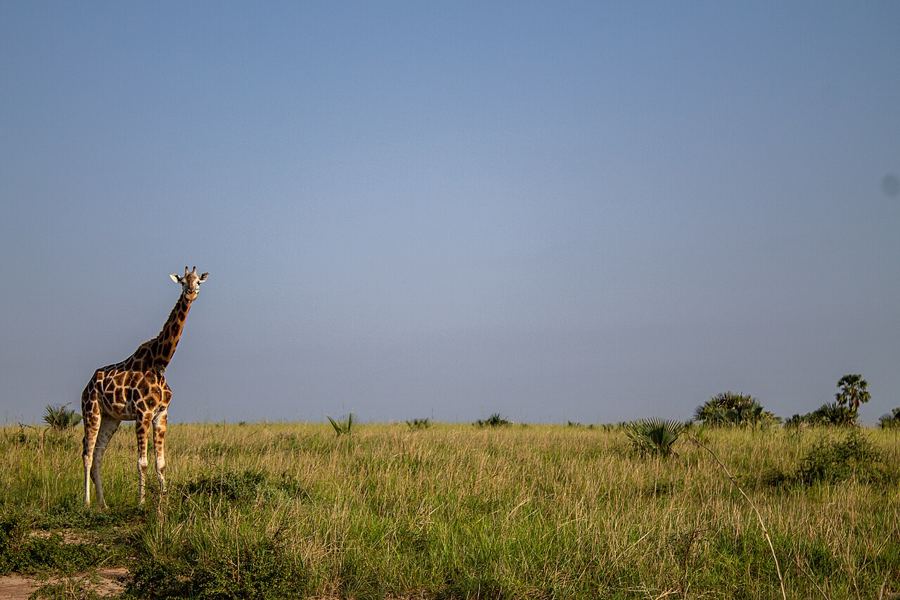
A giraffe is built for one job above all others: reaching leaves that other animals cannot. Almost everything about the way it lives follows from that, from the length of its tongue to the way it sleeps, fights and drinks. Watching one closely, rather than ticking it off and driving on, is one of the quiet rewards of time in the bush.
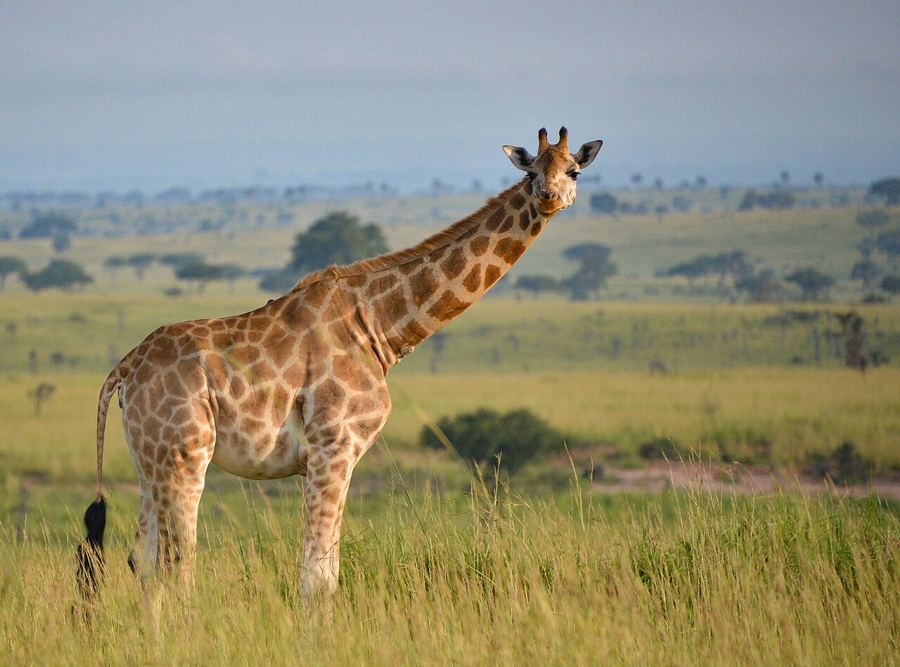
Adult males can stand well over five metres tall, females a little less, and yet the neck holds only seven vertebrae, the same number as yours. Each one is simply very long. The animal's heart is large and powerful, pumping blood up that long neck to the brain, and special valves and tight skin on the legs help manage the pressure when the head swings down to the ground.
Browsing among the thorns
Giraffe are browsers, not grazers. They eat leaves, shoots, flowers and pods, and across much of Africa their favourite food comes from thorny acacia trees, now often placed in the genera Vachellia and Senegalia. The thorns do not stop them. A giraffe's tongue is long, muscular and grasping, often around half a metre, and dark in colour, which is thought to protect it from sunburn during long hours of feeding.
Watch a giraffe at an acacia and you will see it wrap its tongue around a twig and draw it through the mouth, stripping leaves while leaving the thorns behind. Thick saliva and tough lips help with whatever thorns get through. An adult can spend most of the daylight hours feeding, and like a cow it is a ruminant, so you will often see it standing still and chewing the cud, a lump of food travelling visibly up and down the neck.
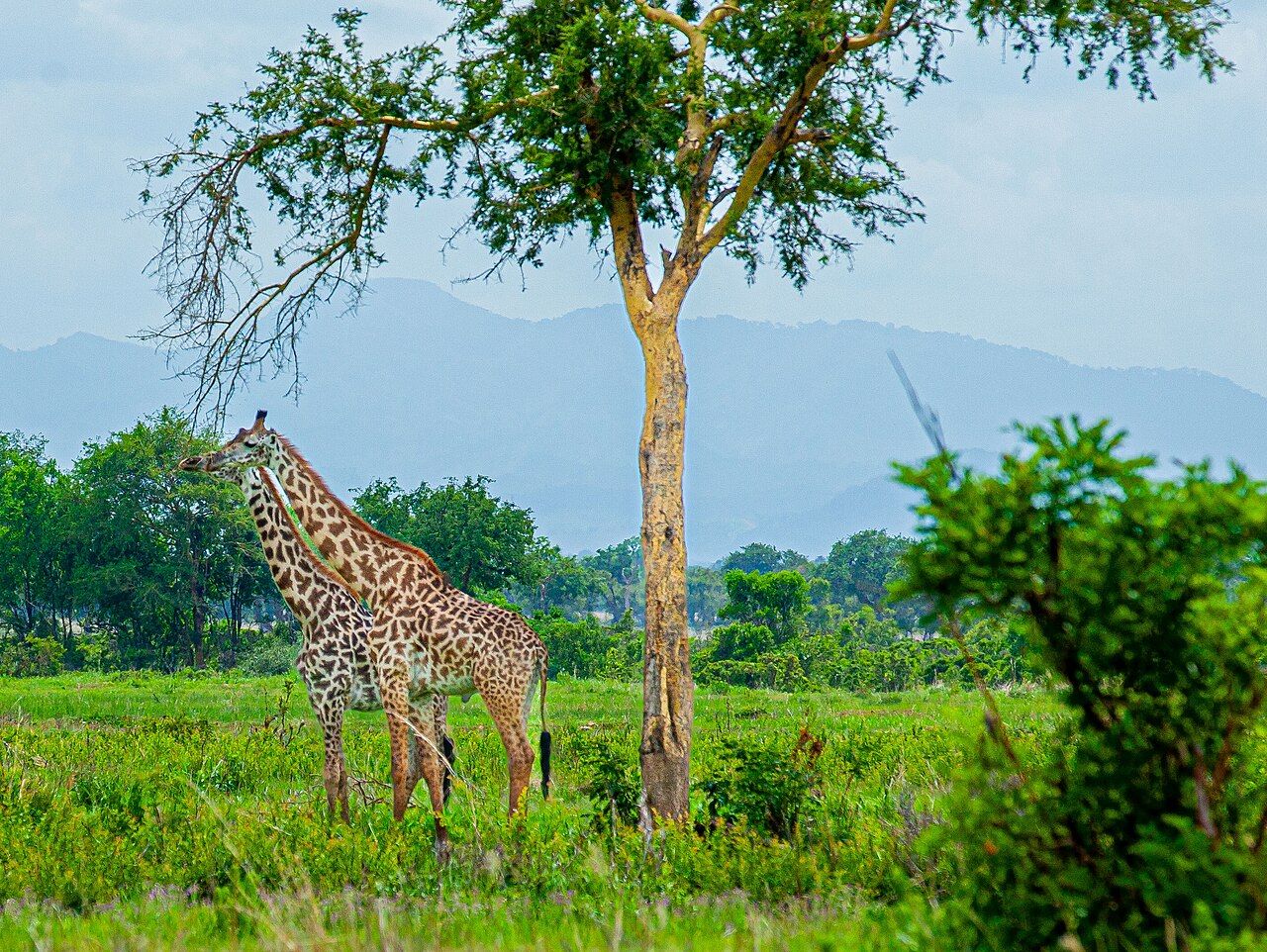
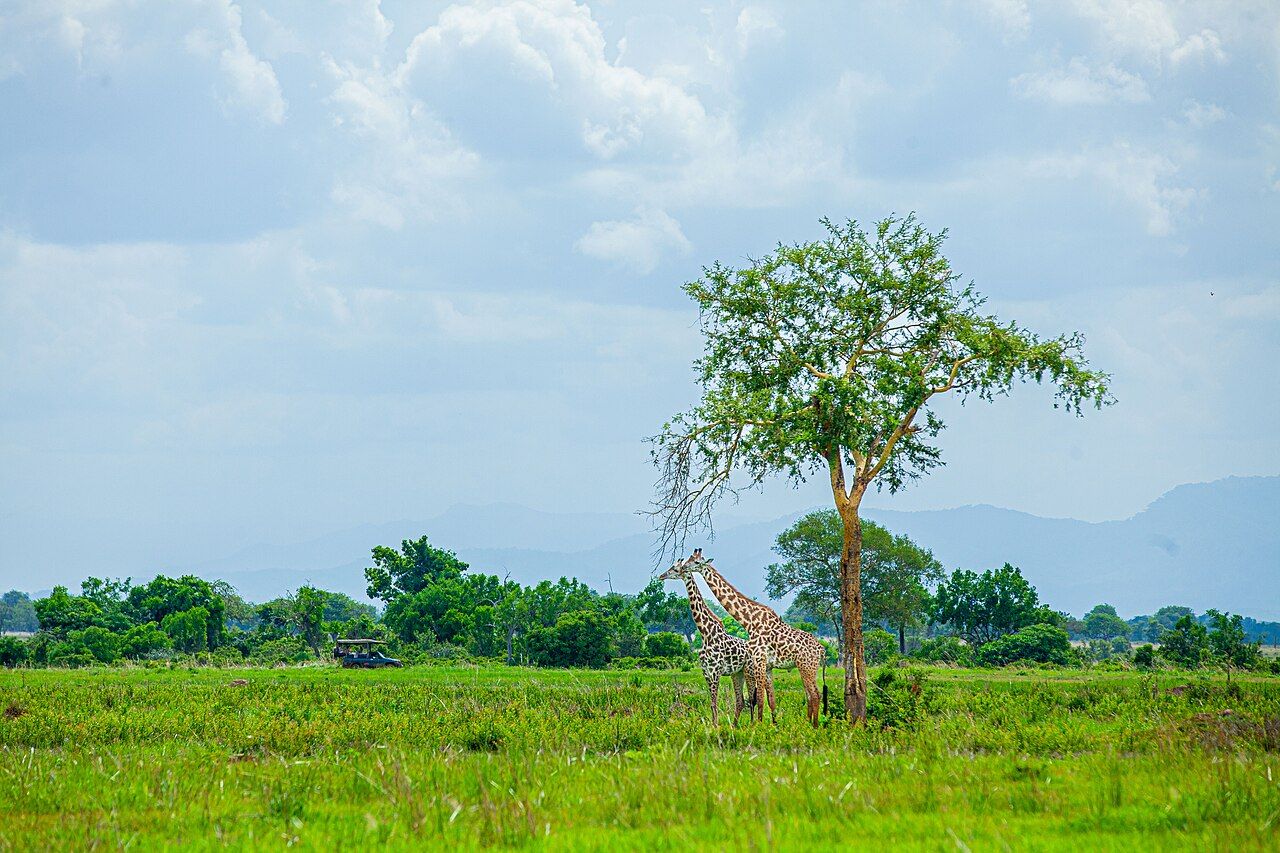
Height divides the menu. Males tend to feed higher, stretching up with neck extended, while females often bend to feed at body height or below. Some trees fight back with chemistry, raising their tannin levels when browsed, which may be one reason giraffe move from tree to tree rather than stripping one bare.
Sleep in short spells
Giraffe sleep remarkably little in the wild, often under a couple of hours in every twenty-four, taken in short spells of a few minutes at a time. Much of it happens standing up. Occasionally, usually at night or in the safety of a group, a giraffe lies down with its legs folded beneath it, and for brief moments of deep sleep it may curl its neck back and rest its head on its hindquarters.
Lying down is a risk. Getting up takes a giraffe a few awkward seconds, a rocking movement of neck and legs, and a predator can use those seconds. Seeing a group resting on the ground in daylight is a sign they feel very secure, and it is worth stopping for.
Predators matter less as a giraffe grows. An adult's kick, delivered forward or sideways with a heavy hoof, can seriously injure a lion, and healthy adults are taken mostly when caught off balance, drinking or lying down. Calves, the old and the sick are far more vulnerable.
Necking and the life of bulls
Young males spend a great deal of time sparring. Two stand side by side, often facing the same way, and swing their necks and heads at each other in slow, almost graceful arcs. This is necking, and among young bulls it is mostly practice, a way of testing strength and settling who stands where.
Between mature bulls it can be a different matter. Blows land with real force on the body and legs, the ossicones on top of the head acting like clubs, and serious fights can occasionally leave an animal stunned or injured. Older males often have bald, polished ossicones and lumpy bone deposits on the skull from years of this. Females usually keep the tufts of hair on their ossicones, which is a handy way to sex a giraffe at a distance.
A bull that wanders through a herd sniffing at females is checking whether any are ready to breed. A bull that wanders through a herd sniffing at females is checking whether any are ready to breed. You may see him nudge a female and taste her urine, then lift his head with lips curled back, a gesture called flehmen that helps him read her chemistry.
Calves and creches
Pregnancy lasts around fifteen months, and a mother gives birth standing up, so the calf begins life with a drop of a couple of metres to the ground. It is usually on its feet within an hour and suckling soon after. The first weeks are the most dangerous: lions, hyenas, leopards and wild dogs all take young giraffe, and many calves do not survive their first year.
Mothers often leave young calves together in a creche, a small group of youngsters watched over by one or two adult females while the others feed farther away. Finding a creche is a quiet thrill. The calves are curious, with fluffy ossicones and soft coats, and they tend to stand and stare before deciding whether to run. Keep your distance and your engine off, and they may relax enough to fold down and rest.
Drinking with legs apart
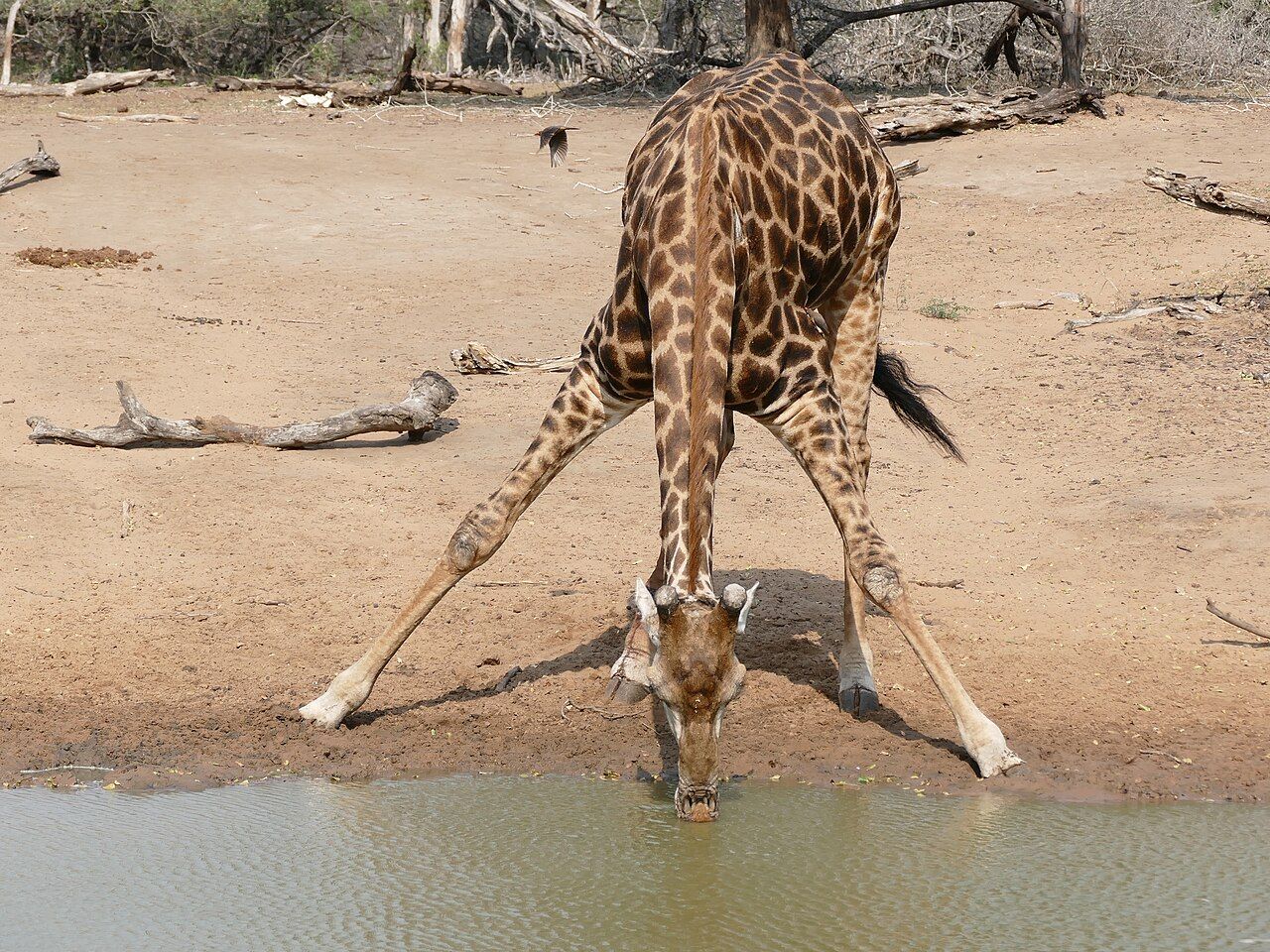
A giraffe can go for days without drinking, getting much of the water it needs from fresh leaves and dew. When it does drink, it has to spread its front legs wide or bend its knees to bring the head down to the surface, an awkward stance that leaves it slow to react. Giraffe know this. They approach water cautiously, scanning for long minutes, and usually drink in short bursts, raising the head between sips to look around.
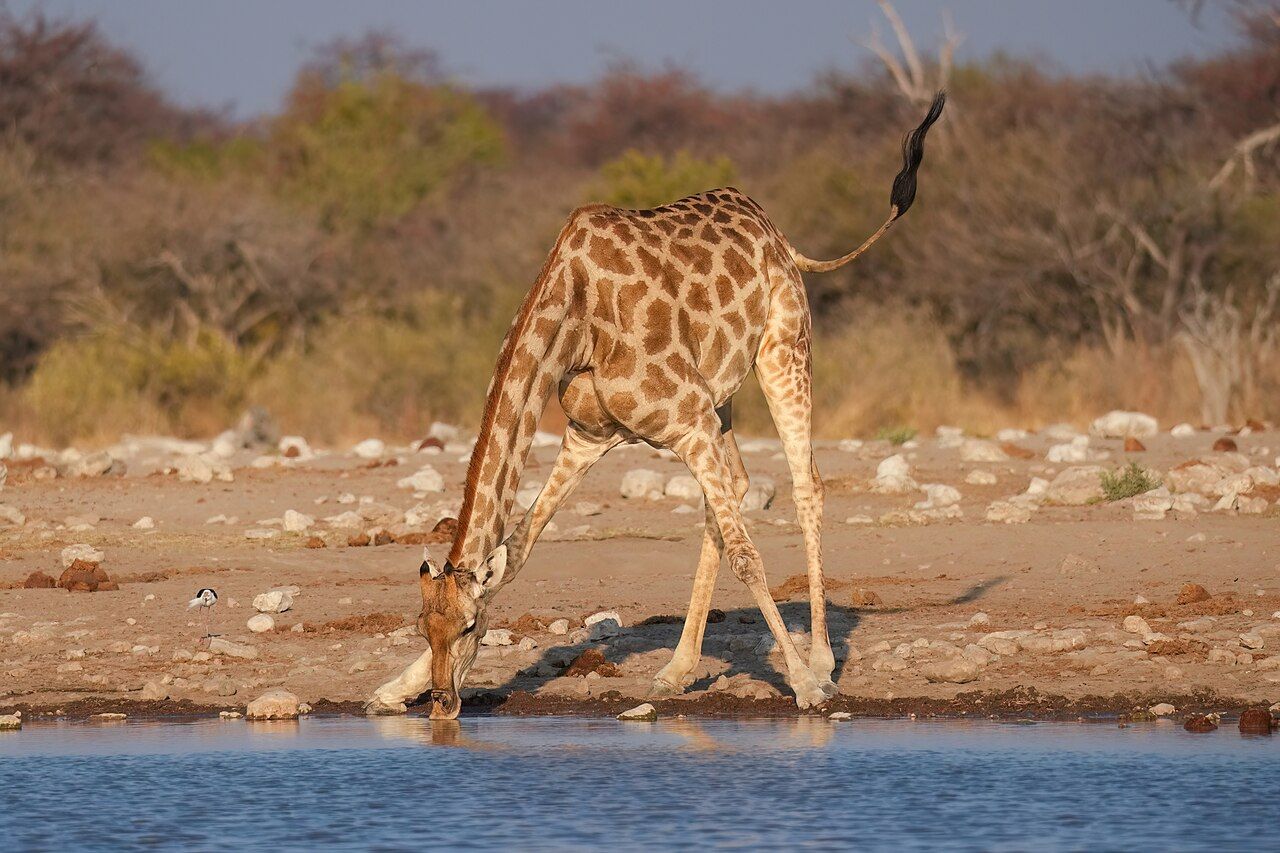
In the dry season, waterholes and rivers become the best places to watch this, and parks such as Etosha in Namibia are known for it. Other animals often hang back while giraffe drink, and giraffe in turn watch the other animals, so a waterhole scene is a lesson in who trusts whom. The giraffe's height makes it an early warning for everyone: when the giraffe all stare in one direction, follow their gaze.
Watch too for the small brown birds riding on a giraffe's neck. Oxpeckers pick ticks and other parasites from the skin, and they also feed at small wounds, so the relationship is not entirely friendly. A giraffe will tolerate a dozen of them clambering over its face and ears, shaking them off only when they become too insistent.
Giraffe groups are loose. Members come and go over hours or days, and a herd you see in the morning may have reshuffled by afternoon. Some females keep loose bonds over years, and researchers have recorded giraffe humming quietly at night, a sound few visitors ever hear. To place what you see in a wider picture, read about the dry and green seasons and how they shape a giraffe's year.