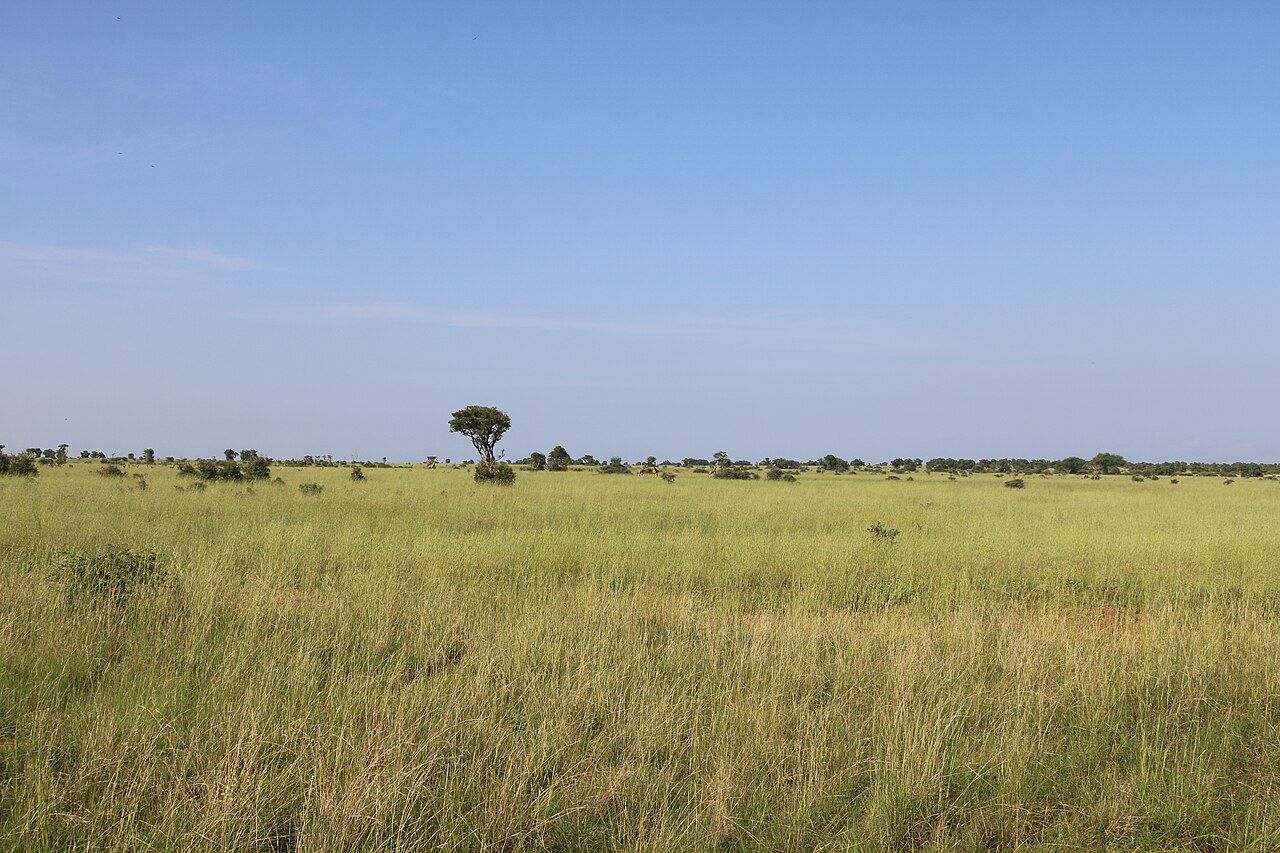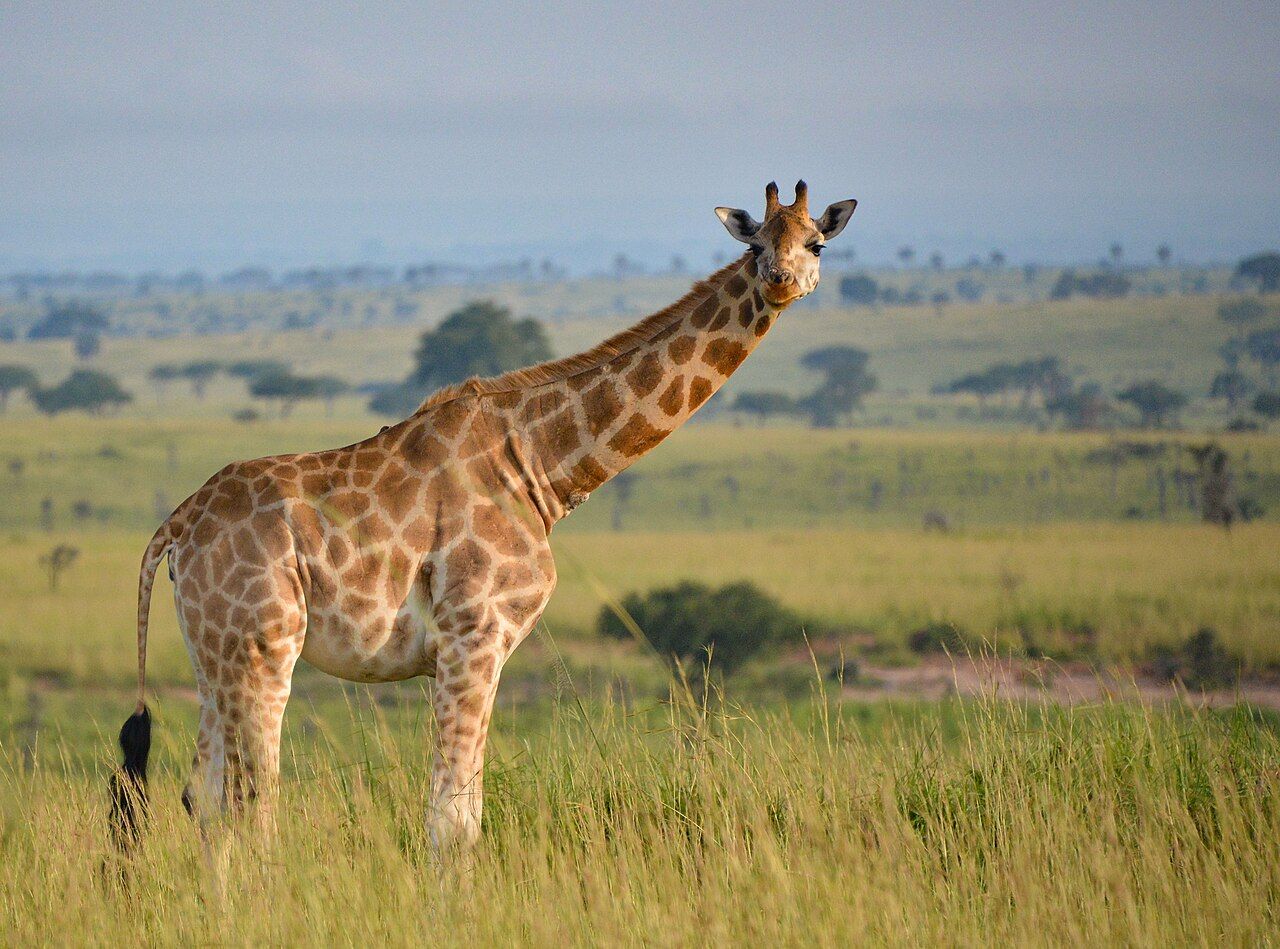
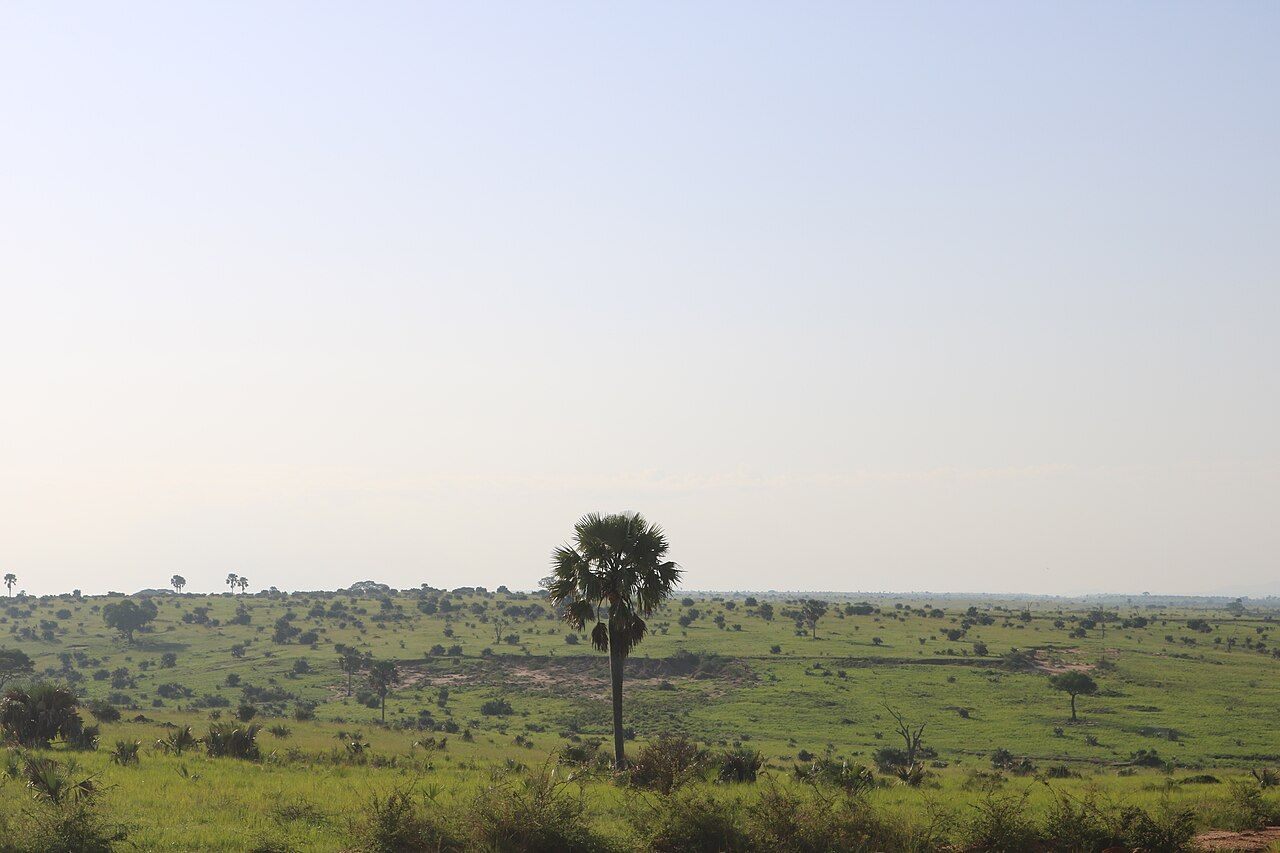
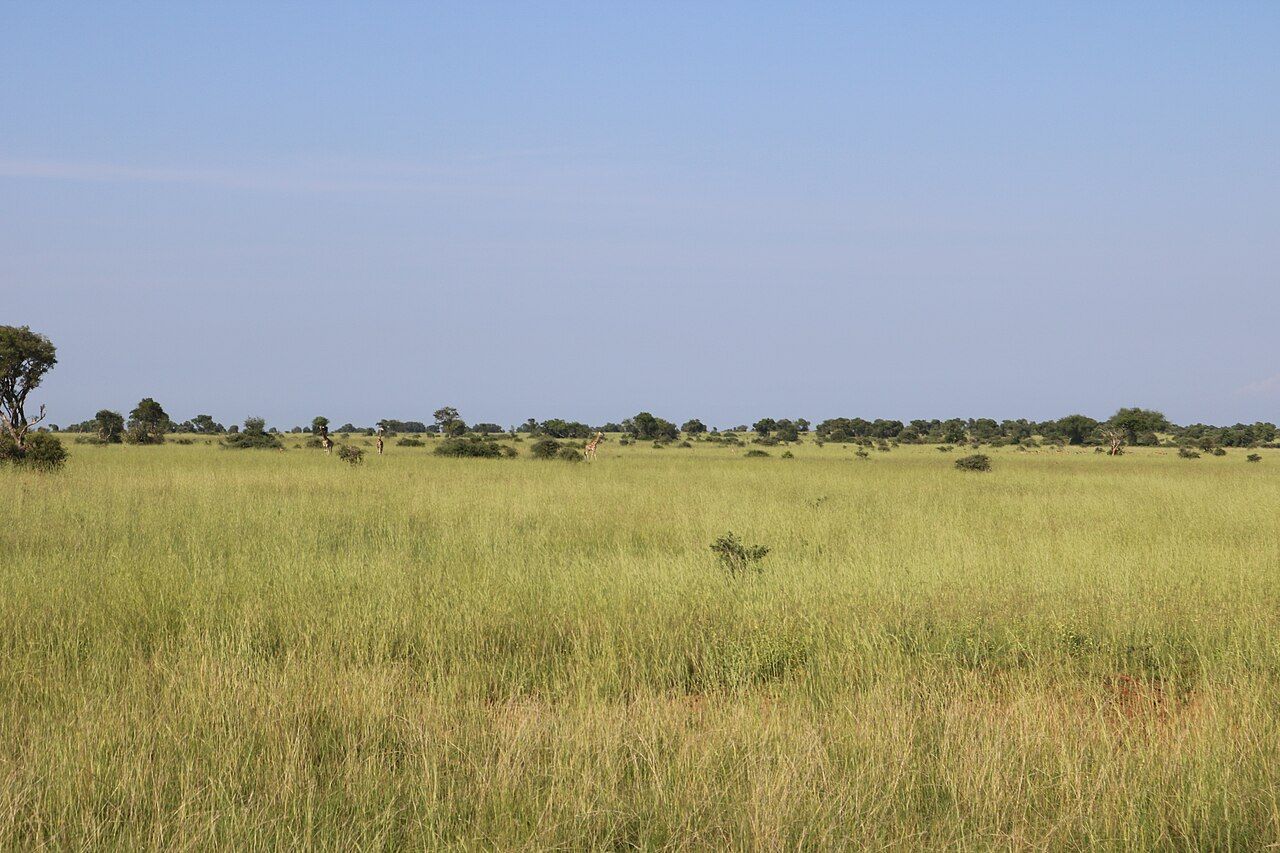
Murchison Falls National Park sits in north-western Uganda, where the Victoria Nile cuts through the edge of the Albertine Rift on its way to Lake Albert. It is the country's largest national park, and its landscape changes sharply from one bank of the river to the other. South of the Nile, much of the park is woodland and thicker bush. North of it, rolling grassland dotted with borassus palms and acacia stretches towards the delta, and this is giraffe country.
The giraffe here are Rothschild's giraffe, the form that genetic studies have shown to be the same as the Nubian giraffe. Murchison Falls is widely regarded as holding the largest population of them anywhere, with numbers estimated at well over a thousand and growing. For anyone keen to see this kind of giraffe, there is no better place to start.
The falls themselves
The park takes its name from the place where the Nile squeezes through a gap in the rock only a few metres wide and drops in a thundering rush of white water. The noise and spray reach you long before the view does. A path on the south bank leads to viewpoints at the top of the falls, where you can stand close to the edge of the gorge and feel the ground tremble. A walk down from the top gives different angles on the cascade, though the trail is steep in places.
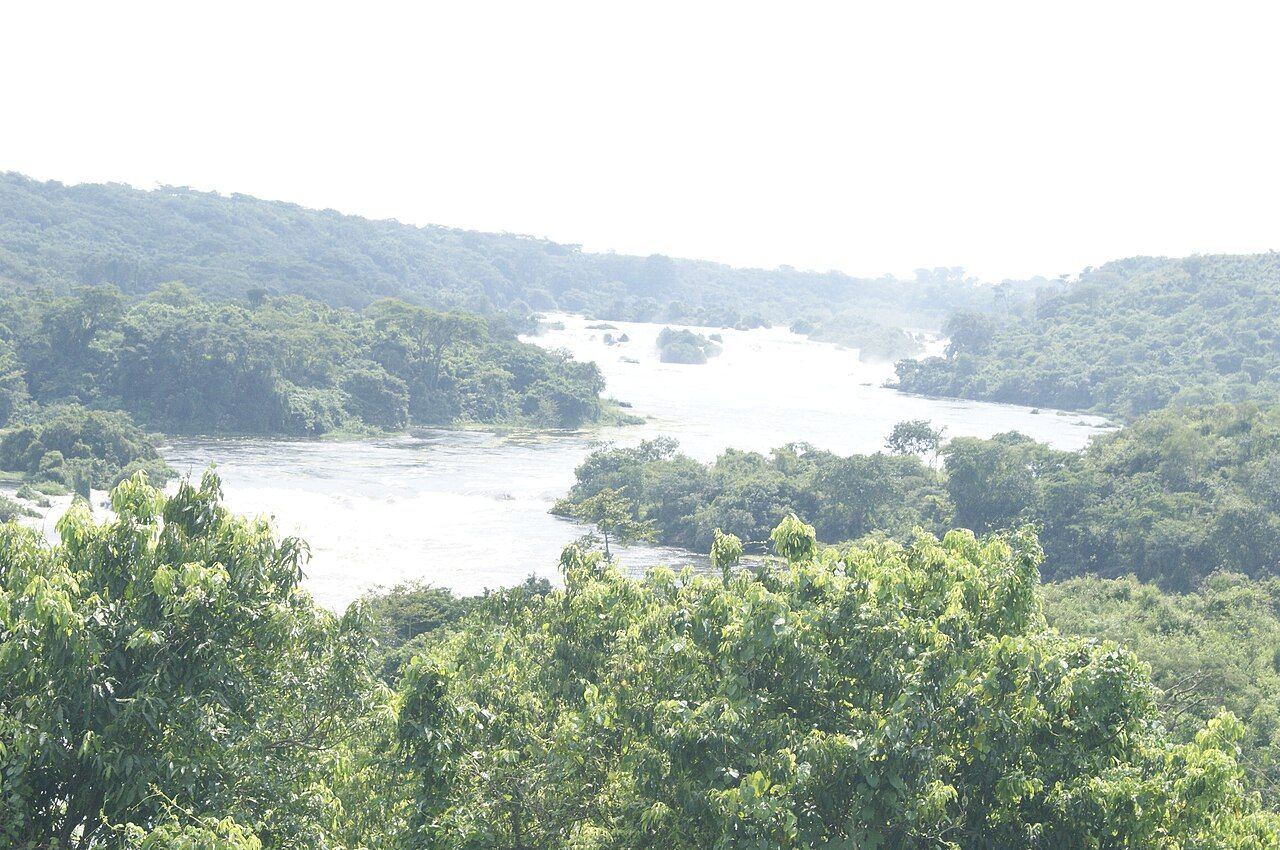
Below the falls the river widens and calms, and boat trips run upstream from near Paraa towards the base of the falls. The trip passes hippos, crocodiles and a great variety of water birds, and elephants and buffalo often come down to drink. A separate trip downstream heads towards the papyrus of the delta, where shoebills are sometimes seen. Departure times and fees change, so ask at the park office before planning around them.
Giraffe on the north bank
To reach the giraffe, you cross the Nile at Paraa by vehicle ferry and enter the northern sector. A network of game tracks loops through the grassland between the Victoria Nile and the Albert Nile, and giraffe can turn up almost anywhere along them. Groups of a dozen or more are not unusual, sometimes moving in long lines across the open grass, sometimes scattered among the palms.
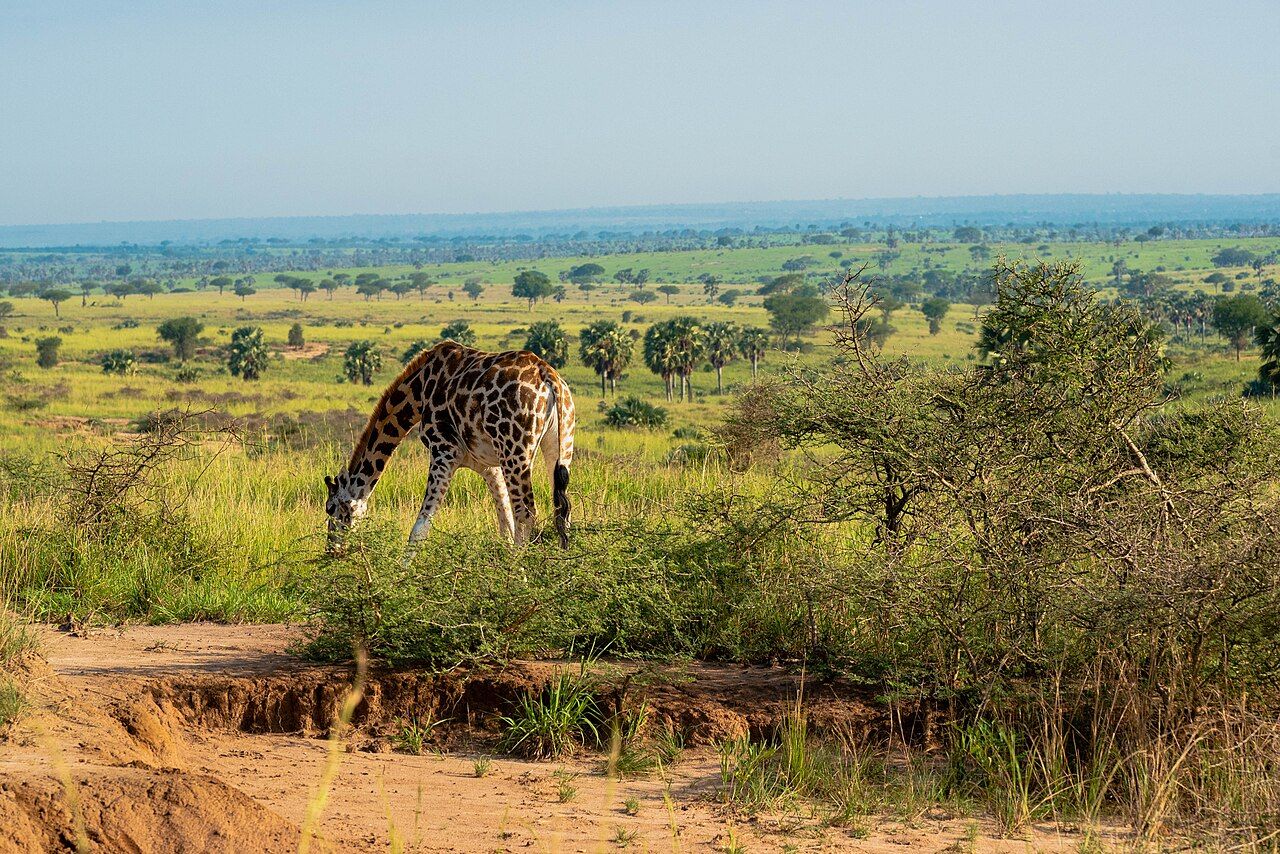
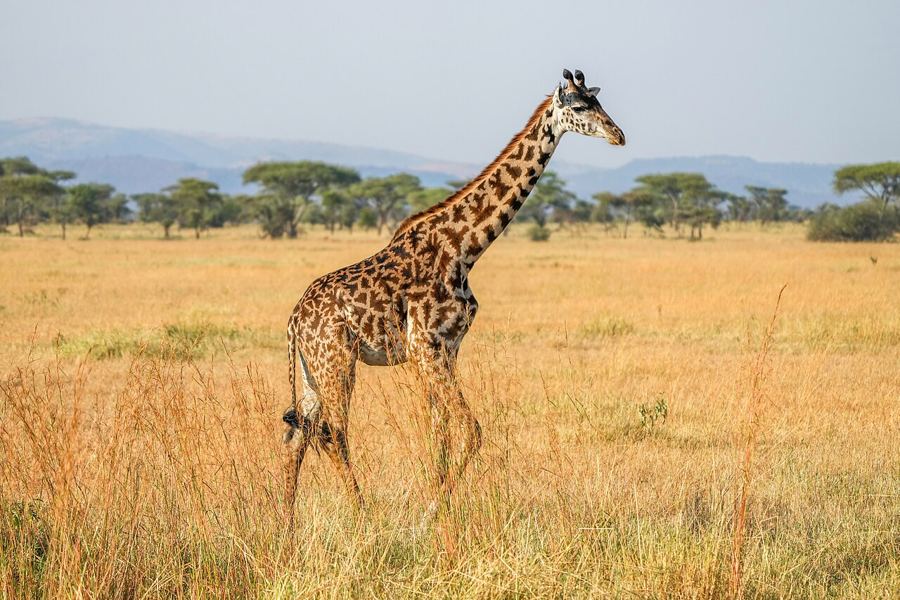
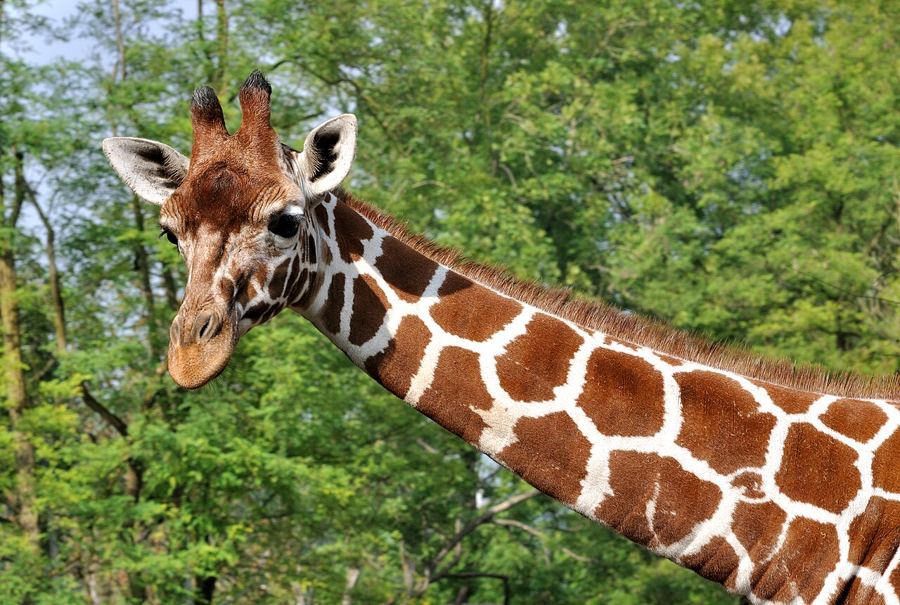
Look at the legs. Rothschild's giraffe have pale lower legs with few or no spots, as if they are wearing white stockings, and the patches on the body are large and brown with broad, creamy lines between them. Adult males often show a bump in the middle of the forehead, and some carry extra knobs behind the ears. Once you have seen a few, the pattern becomes easy to recognise, and the guide to the four species explains how it compares with the others.
Towards the delta, where the Victoria Nile meets Lake Albert, the grassland opens out and the palms thin. Giraffe often walk in single file here, crossing the tracks with unhurried steps, and in the soft light of early morning you can see the blue line of the hills beyond the lake in the Democratic Republic of Congo.
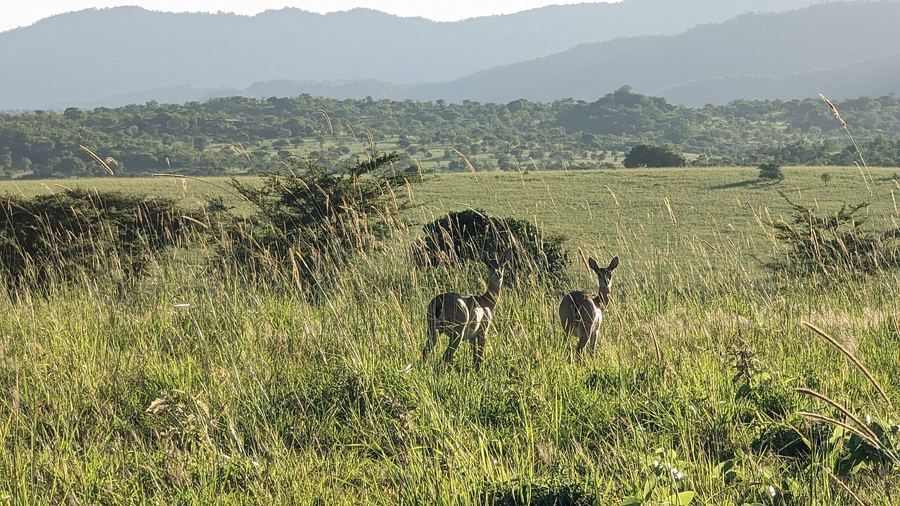
The north bank is not only about giraffe. The north bank is not only about giraffe. Uganda kob gather in large numbers on the grassland, with oribi, Jackson's hartebeest, warthog and buffalo, and elephants move through the taller grass. Lions are present, and a pride resting near a kob herd can make for a long, absorbing wait. Birds of prey hunt over the open country, and the delta area is rich in herons, storks and kingfishers.
Game drives in general
Most visitors explore the north bank by vehicle, either with their own driver-guide or on drives arranged locally. Morning is best, when animals are active and the light is soft across the grass; late afternoon is a close second. The midday heat sends many animals into the shade, and giraffe often stand quietly beneath trees or among the palms, chewing the cud.
The tracks can be rough, and some become difficult after heavy rain, so a high-clearance vehicle is wise. Stay on the tracks and in your vehicle unless you are with an armed ranger on an approved walk. Rangers can sometimes accompany drives for a fee, and their knowledge of where giraffe and lions have been seen recently is valuable.
In recent years, oil development has brought new roads, works and traffic to parts of the park, especially in the north. Its effect on wildlife and on the visitor experience is still debated. Expect to see signs of it, and keep to the tracks that remain open to visitors.
When you find a group, stop well back and switch off the engine. Rothschild's giraffe on the north bank are used to vehicles and usually carry on browsing, but a calf or a nervous female may move off if you edge too close. Give them time and the group will often drift towards you on its own.
Seasons and conditions
Uganda straddles the equator, and Murchison Falls has two broad rainy periods, roughly March to May and again from September to November, though the timing varies from year to year. The drier months, around December to February and June to August, make tracks easier to drive and concentrate animals near water. The grass is also shorter after burning in the dry season, which helps with spotting.
The wetter months bring green landscapes and fewer visitors, and giraffe remain on the north bank throughout the year. Afternoon storms can be dramatic, but they rarely last all day. Whatever the season, temperatures are warm and the sun strong, and a hat and plenty of water are essentials.
Getting there and staying well
The park lies several hours' drive north-west of Kampala, usually by way of Masindi, with the last stretch on gravel. Small airstrips serve the park for those flying in. Within the park, the ferry at Paraa links the two banks; it runs at set times through the day, and missing the last crossing can leave you on the wrong side of the river for the night.
Malaria is present, and tsetse flies can be a nuisance in wooded areas, so ask a doctor about protection before you travel and wear light, neutral colours. Carry enough water, keep a spare tyre in good condition and leave the park before gates close. For a further look at Uganda's giraffe, the remote Kidepo Valley in the far north holds a smaller herd of the same kind, and the story of their move there begins here on the north bank.