The Serengeti stretches across northern Tanzania, from the shores of Lake Victoria to the edge of the Ngorongoro highlands and north to the border with Kenya. Its name is often said to come from a Maa word for endless plains, and in the south that is exactly what you see: short grass to the horizon, broken only by rocky kopjes. Farther north and west, the plains give way to acacia woodland, rivers and hills.
Most visitors come for the great migration, the movement of more than a million wildebeest with zebra and gazelle. Giraffe take no part in it. They are residents, staying within their home ranges while the herds come and go, and that makes them one of the most reliable sights in the park, whatever the month.
The Masai giraffe
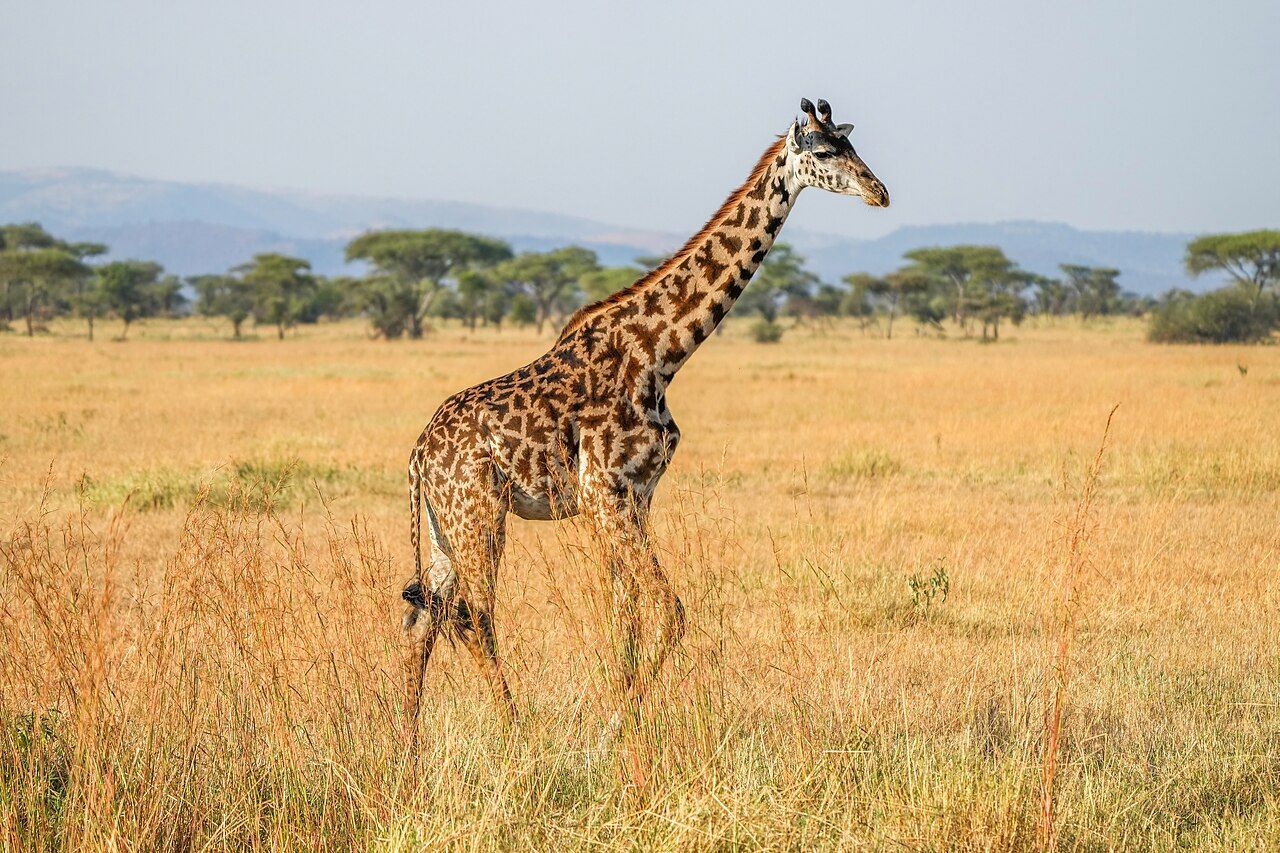
The giraffe here are Masai giraffe, found through southern Kenya and much of Tanzania. They are the tallest of the giraffe, with males among the tallest land animals on earth, and their coat is the most distinctive. The dark patches are jagged and irregular, with ragged edges that look like vine leaves or splashes of ink, set on a creamy background. No two are the same, and individual animals can be recognised by their patterns.
The Masai giraffe is Tanzania's national animal, appearing on the country's coat of arms. Yet its numbers fell steeply in recent decades through habitat loss and poaching, and it has been listed as endangered in recent assessments. Within protected areas such as the Serengeti, populations are more secure, and in some places they are recovering. Older bulls often darken with age until their patches look almost black, while females stay paler and keep the hair tufts on their ossicones. The four giraffe species explains how the Masai giraffe fits into the wider family.
Seronera and the central valley
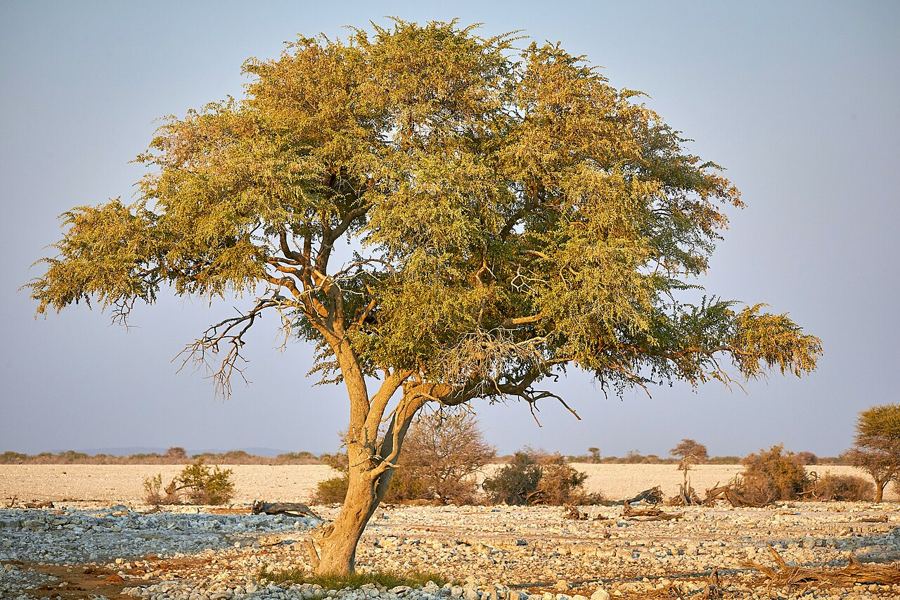
The heart of the park is the Seronera valley, in the central Serengeti. The Seronera River and its tributaries are lined with umbrella thorn and other acacias, sausage trees and fig trees, and this mix of water, shade and browse makes it excellent giraffe country. Groups browse along the watercourses, cross the open grassland between thickets, and rest in the shade of larger trees in the heat of the day.
Seronera is also famous for big cats. Lions rest on kopjes and in the long grass, leopards drape themselves in the sausage trees along the river, and cheetahs hunt the open plains. The giraffe often notice predators first, their height giving them a clear view, and a group of giraffe staring fixedly in one direction can lead you to a lion or leopard you might otherwise miss.
Look up into the crowns of the trees as you drive. Giraffe often stand half hidden among the acacias, heads level with the canopy, and at a distance a neck can pass for a leaning branch until it moves. Granite kopjes rise from the plains around Seronera too, islands of rock and fig trees where lions and hyraxes shelter, and a giraffe walking past one in the first light is a scene many visitors wait for.
The central Serengeti holds animals all year, which is why it is the most visited part of the park. The central Serengeti holds animals all year, which is why it is the most visited part of the park. At busy sightings, vehicles can gather in numbers, so be patient and considerate, and remember that good giraffe watching often happens quietly, away from the crowds around the cats.
The migration seasons in general
The wildebeest follow the rains, and their movements shape the experience in different parts of the park. The timing varies from year to year, but a broad pattern holds. Around December to March, the herds gather on the southern plains, and calving takes place in the early months of the year. From roughly April to June they move north and west through the central and western areas. In the dry season, about July to October, they spread into the northern Serengeti and across into Kenya's Masai Mara, before returning south with the short rains.
For giraffe, the timing matters less. They stay in the woodland and riverine areas all year, and you can see them in any season. The dry months from June to October are popular because animals concentrate near water and vegetation thins, making spotting easier. The long rains of roughly March to May bring green landscapes and fewer visitors, but some tracks can be muddy. The calving season brings predators and young animals of all kinds, including the occasional giraffe calf.
Giraffe calves are born throughout the year, though many births seem to follow the rains, when fresh browse is plentiful. A newborn stays close to its mother in thick cover for its first days, then joins other young calves in a loose creche. Finding one, all knees and fluffy ossicones, is one of the gentler pleasures of a Serengeti drive.
Most visitors reach the Serengeti by road from Arusha, passing through the Ngorongoro Conservation Area on the way. The drive takes most of a day, with the last part on gravel and often dusty. Others fly to airstrips within the park, including one at Seronera, which saves time but limits what you see along the way.
The Ngorongoro Conservation Area has its own fees and rules, separate from the park's. Giraffe are rarely if ever seen on the crater floor, which is hemmed in by steep walls, but you may pass them on the lower slopes and the plains towards the Serengeti.
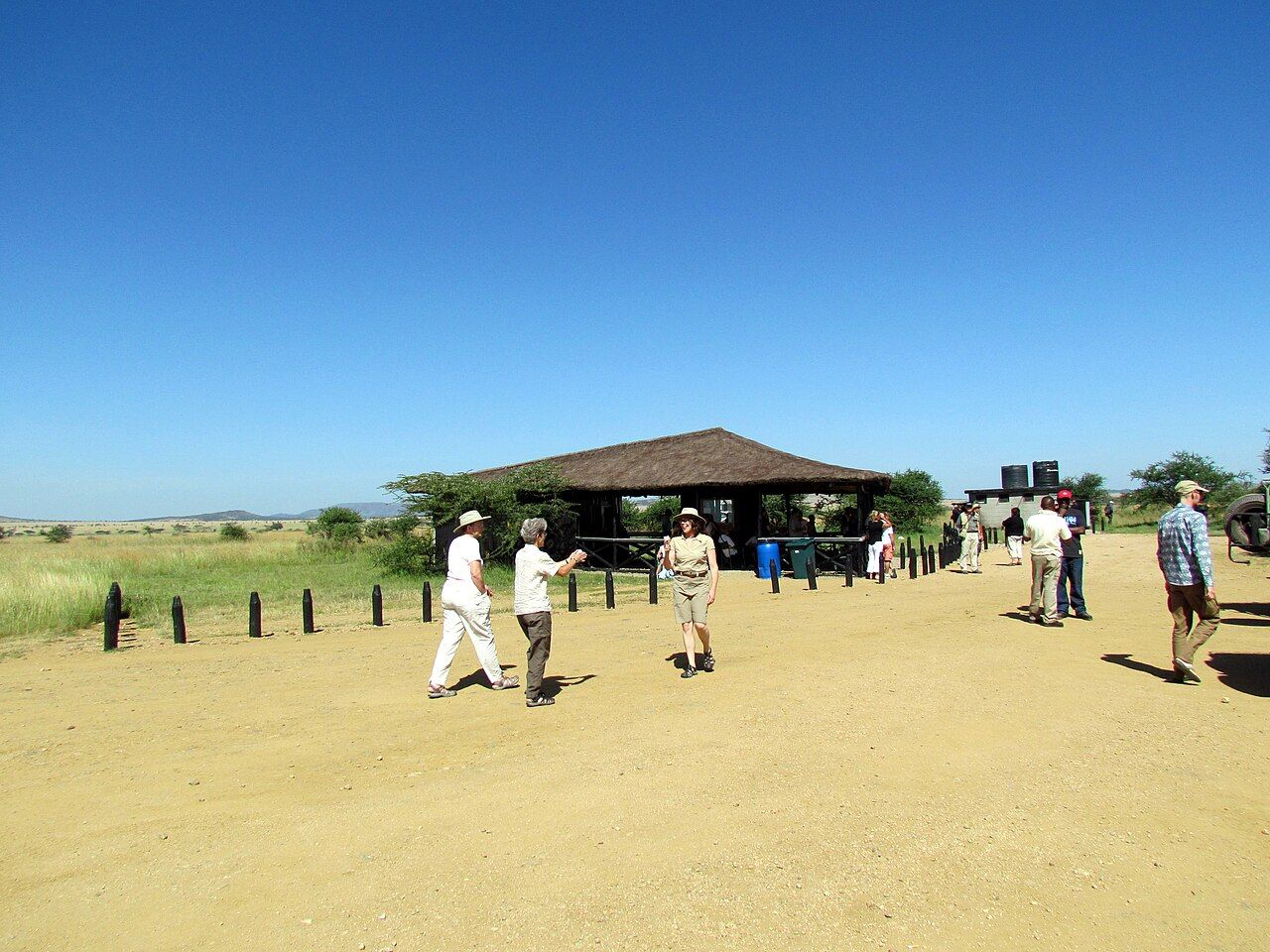
Driving in the park is on gravel tracks, and you must stay in your vehicle except at designated places. Off-road driving is restricted, and rules about approaching animals are enforced. Many visitors travel with a driver-guide who knows the area and its regulations; for more on the choice, see self-drive or guided. Park fees are significant and are set by the park authority.
Watching giraffe well
Giraffe in the Serengeti are generally relaxed around vehicles, and once you stop they will often carry on browsing a short distance away. Turn off your engine, keep your voice low and give them time. Watch how they feed among the thorns, how the males test each other with slow swings of the neck, and how a group shifts as one when something catches its attention.
Patience brings small rewards: a calf stretching up to suckle, a bull following a female, two young males beginning a slow necking contest. These moments rarely happen while engines run and people talk across vehicles, and they are worth the wait.
Early morning and late afternoon offer the best light and the most activity, with the low sun warming the coat and throwing long shadows. A giraffe silhouetted against the sky at dusk, with an umbrella thorn beside it, is one of the classic images of East Africa, and the Serengeti is one of the best places to see it. For tips on capturing that moment, see the guide to photographing giraffes.