Kenya offers two very different ways to see Rothschild's giraffe within a short distance of Nairobi. One is close up, at a conservation centre on the edge of the city, where giraffe come to a raised platform to meet visitors. The other is in the wild, in the woodland of Lake Nakuru National Park, a few hours to the north-west. Seeing both gives a sense of how this rare giraffe was saved and how it lives today.
The giraffe centre in Nairobi
In the leafy suburb of Langata, on the south-western side of Nairobi, a conservation centre was set up in the 1970s to protect Rothschild's giraffe, which were then in serious trouble in Kenya. The centre began by caring for a small group of giraffe and breeding them, and over the years animals from here have been released into protected areas across the country.
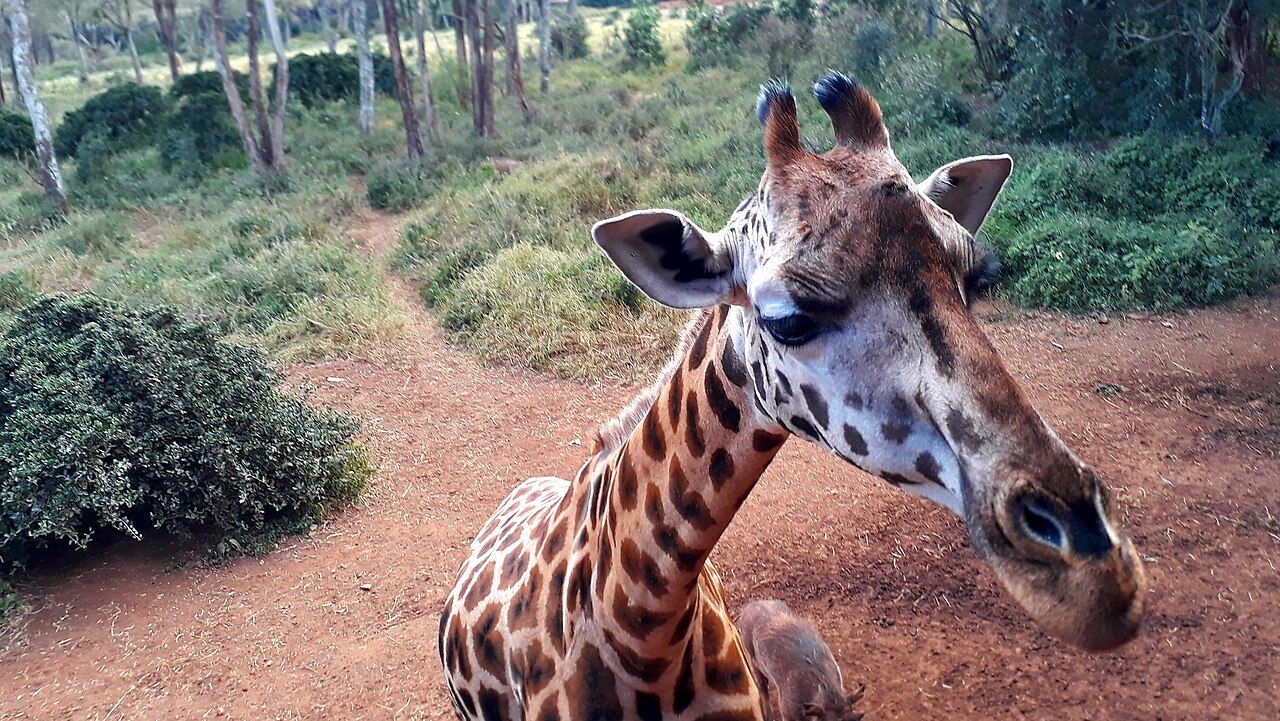
Today, it is best known for its education work and its feeding platform. Visitors climb onto a raised wooden deck at head height with the giraffe, which come to take pellets offered by hand. Being face to face with a giraffe, seeing its long dark tongue, its eyelashes and the texture of its coat, is something few people forget. The centre also runs programmes for Kenyan schoolchildren, and the surrounding land is a small nature sanctuary.
Should you feed a giraffe?
Feeding wild animals is generally a bad idea. It changes their behaviour, can harm their health and can make them dangerous to people. In parks and reserves, you should never feed giraffe or any other wildlife. A captive conservation centre is a different situation, but it still raises questions worth considering.
At the centre, giraffe are fed only special pellets in controlled amounts, as a supplement to their natural browse. Staff manage how much each animal receives, and the giraffe are free to come and go. Even so, close contact carries some risks, both for giraffe and visitors, and practices such as kissing giraffe or putting food between your lips are best avoided. Wash or wipe your hands afterwards, and follow the instructions of staff.
It also helps to remember what the platform cannot show. A giraffe here is approachable because it has grown up around people; wild giraffe are not, and treating them the same way would be a mistake. Seeing both, close up and at a distance, helps you understand the difference.
A visit here is a chance to learn, not only to touch. Some visitors choose to watch rather than feed, and simply standing on the platform is enough to see the giraffe at close range. A visit here is a chance to learn, not only to touch. The displays and talks explain the work done to save this kind of giraffe, which is the same as the Nubian giraffe, as explained in four giraffe species.
Lake Nakuru National Park
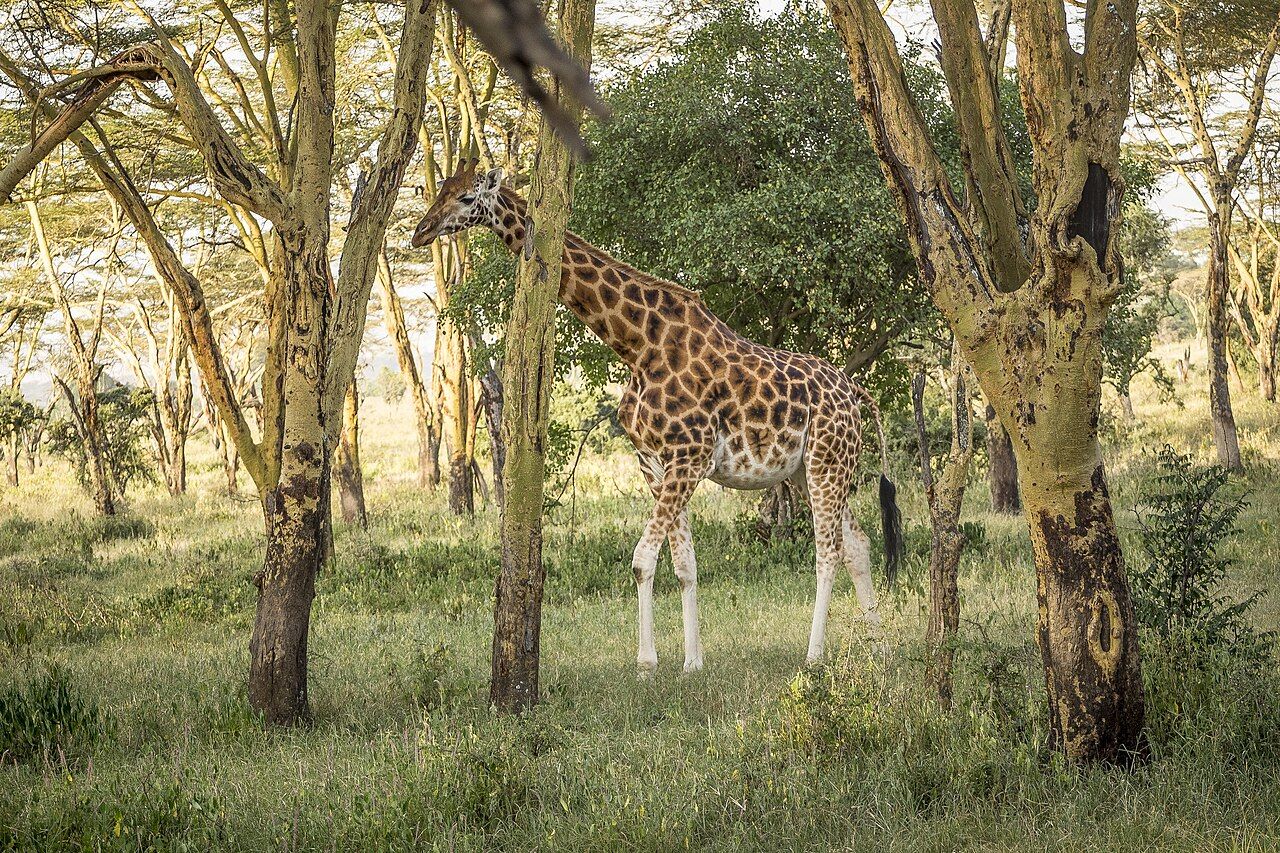
Lake Nakuru lies in the Rift Valley, about three hours' drive north-west of Nairobi. The park surrounds a shallow alkaline lake and is fenced, which has helped it become a sanctuary for both black and white rhinos. Rothschild's giraffe were introduced in the 1970s, and they have thrived here, forming one of the most visible populations in Kenya.
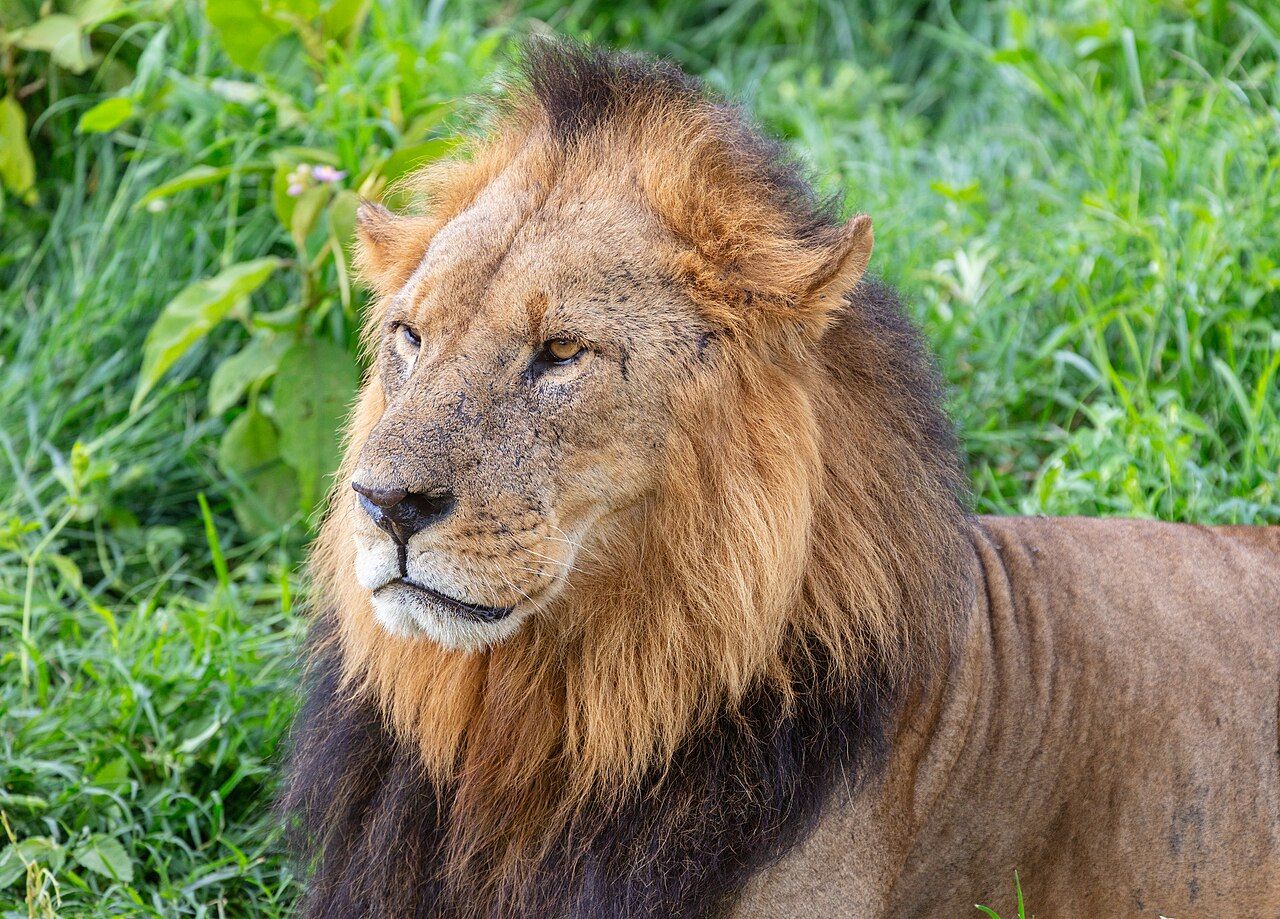
The giraffe favour the woodland of yellow-barked acacia, often called fever trees, around the lake. Their coats blend surprisingly well with the dappled light and pale trunks, so drive slowly and look carefully. Buffalo, waterbuck and zebra often graze the open ground near the lake shore. Lions and leopards live in the park, and the rhinos are often seen grazing in the open grassland.
The park is small enough to drive around in a day, and the giraffe tend to stay within a few favoured stretches of woodland. Rangers at the gate can tell you where they were last seen. Give them time once you find them: they often stand still among the trunks, watching you as closely as you watch them.
Flamingos when present
Lake Nakuru was once famous for its flamingos, which gathered in vast pink flocks along the shoreline. Their numbers depend on the lake's water level and chemistry, which affect the algae they eat. In recent years, rising water levels have flooded parts of the park, reduced the lake's alkalinity and made flamingo numbers much lower and less predictable.
You may see a few flamingos, or many, or none at all. Pelicans, cormorants and other waterbirds are more reliable. When flamingos are present, they feed with heads upside down in the shallows, filtering tiny algae from the water, and their slow progress along the shore is worth watching. Viewpoints on the escarpment above the lake give wide views across the water and the woodland, and they are worth a stop in the morning when the air is clear.
Lake Nakuru is reached by road from Nairobi, through the Rift Valley, with the town of Nakuru close to the main gate. On a clear morning the drive gives wide views over the valley floor from the escarpment, a good introduction to the landscape around the lake. The park's roads are mostly gravel and can be muddy after rain; some areas near the shore have been affected by flooding, so ask at the gate which tracks are open. For guidance on travelling with or without a guide, see self-drive or guided.
Giraffe are present all year, and the park can be visited in any season. The drier months make driving easier and animals easier to find, while the green season brings lush landscapes and good birding. Pair a morning at the centre in Nairobi with a day or two at Lake Nakuru, and you will see Rothschild's giraffe both up close and in their natural setting.