There are two broad ways to see giraffe in Africa's parks: drive yourself, or go with a guide in a guide's vehicle, boat or on foot. Neither is better in general. Each suits certain parks, certain travellers and certain budgets, and many trips combine both. The choice depends far more on where you are going than on any rule of thumb.
Parks that suit self-driving
A few parks are well set up for visitors in their own or a hired vehicle. Main roads are tarred or well graded, maps are clear, there are fenced rest camps or accommodation inside the park, and rules are clearly posted. Giraffe are usually common and easy to spot from the roads.
- Kruger National Park in South Africa: tarred main roads, gravel side roads, many rest camps. See giraffe in Kruger.
- Etosha National Park in Namibia: graded gravel roads, waterholes close to the roads. See Etosha's waterholes.
- Smaller parks and reserves in South Africa, Namibia and Botswana, where roads and facilities are similar.
Driving yourself in these places gives you control over pace and timing. You can sit at a waterhole for three hours, leave at gate opening, or turn back when you want a rest. It is often cheaper than a guided trip, though fuel, car hire and park fees all add up, and prices change.
Parks that need a guide
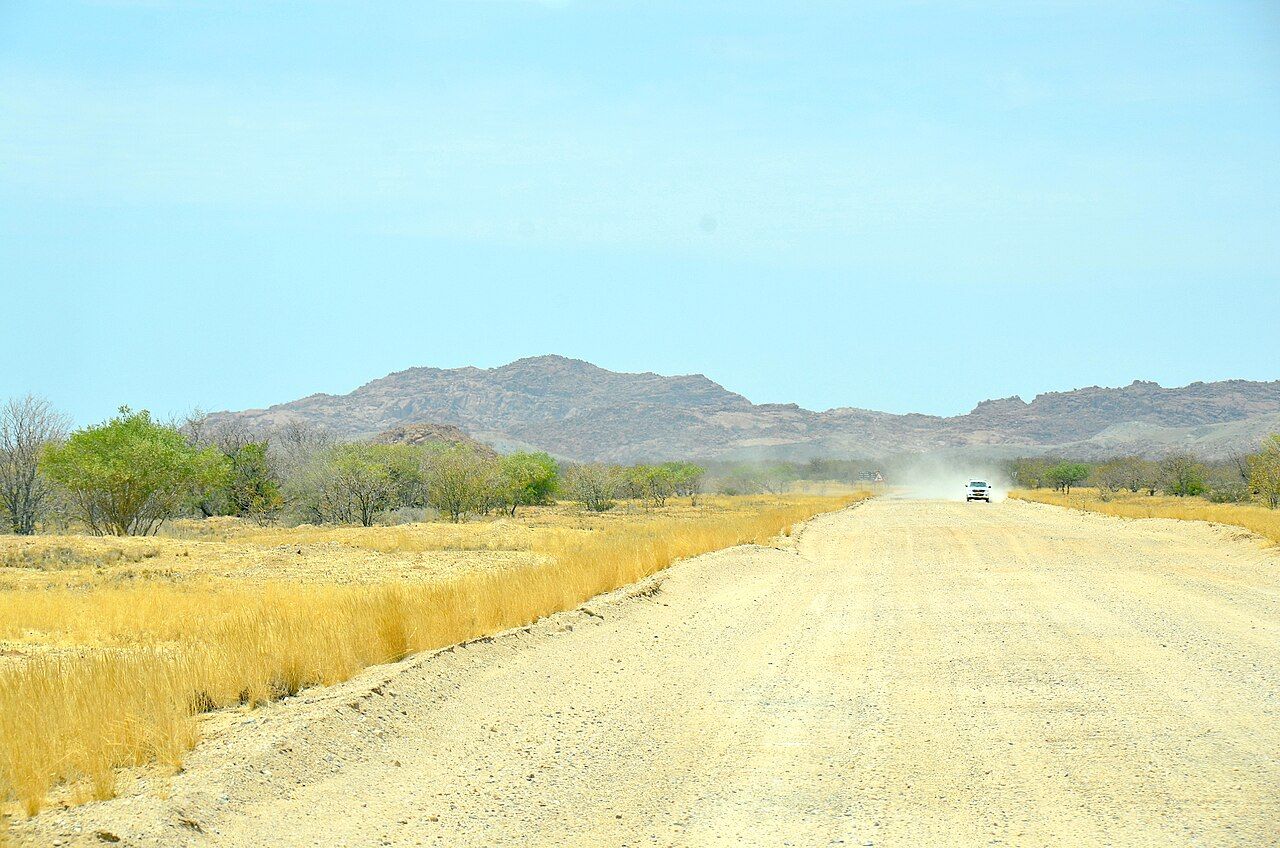
Many giraffe places are not suited to self-driving at all, or only with serious experience and equipment. Roads may be unmarked tracks in deep sand or black-cotton soil that turns to glue in rain, distances are long, and there may be no fuel, no signal and no help nearby.
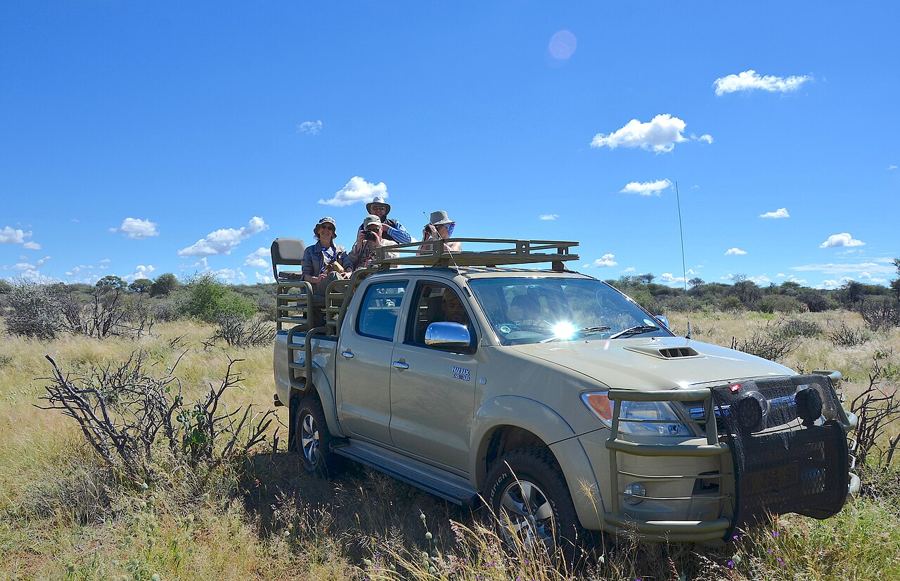
Other places are guided by their nature. In the Okavango Delta, much of the land is reached by boat, mokoro or light aircraft. In the Luangwa Valley, walking with a guide and an armed scout is a big part of the experience; see Thornicroft's giraffe in the Luangwa. At Kouré in Niger, local guides track the giraffe and lead visitors among the fields. In many parks in East Africa, driving yourself is possible but less common, and a driver-guide is the usual way.
Road conditions
Road conditions change with the seasons. In the dry months, gravel and sand roads are generally passable, though corrugations shake vehicles and dust lowers visibility. In the rains, roads may flood, wash out or turn to mud, and some parks close sections or the whole park.
A few general rules help:
- Choose a vehicle suited to the roads; high clearance and four-wheel drive are needed for many routes.
- Learn to change a tyre before you leave, and carry two spares on long routes.
- Do not drive at night outside parks where you can avoid it; animals, livestock and potholes are hard to see.
Distances look short on a map and turn out long on the ground. Allow far more time than you expect, and never plan to arrive at a park gate after closing time.
Fuel stations can be far apart outside the main parks, and some take cash only. Fill the tank at every chance, carry enough water for a day stuck by the road, and keep a paper map as well as one on your phone, since signal fades quickly once you leave the towns.
Park rules in general
Whether you drive or are driven, the rules are similar. Stay in the vehicle except at designated places. Keep to the roads, and never drive off them to get closer to an animal. Keep to speed limits. Never feed animals, and never get out at a sighting. Be inside a camp or outside the park before gate closing time. Rules differ in detail between parks and are updated, so read the current ones when you arrive.
A guide will know and apply these rules, but self-drivers are responsible for following them themselves. Breaking them can bring fines or removal from the park, and more importantly can put you and the animals at risk. The broader notes on safety are in health and safety on safari.
What a good guide adds
A skilled guide knows where giraffe have been feeding, reads tracks, recognises bird alarm calls, and interprets behaviour. They see a giraffe staring and know to look for lions; they can tell a bull from a cow at a distance and explain why the ossicones are bald. A guide also handles the driving, the navigation and the vehicle problems, leaving you free to watch.
The drawbacks are less control over timing, sharing a vehicle with others whose interests may differ, and usually a higher cost. If giraffe are your main interest, say so at the start. A good guide will take time over them.
Choosing for your trip
A simple way to decide is to ask three questions. Are the roads in this park suitable for an ordinary vehicle in the season you plan to travel? Are there safe places to stay inside or near the park? Will you enjoy the work of driving, navigating and spotting yourself?
If the answers are yes, self-driving is a fine way to see giraffe and to set your own pace. If not, or if the place is remote, a guide is the safer and usually more rewarding choice. Many trips mix the two: self-drive in the south, guided in the delta or the valley. In every case, start early, drive slowly, and give the giraffe time.