Northern Botswana works on an unusual calendar. Rain falls in the summer months, but the great flood of the Okavango Delta arrives months later, in the middle of the dry winter, after water from the highlands of Angola has crept down the river and spread across the flat Kalahari sands. Along the Chobe River to the north-east, permanent water draws animals from far inland as the pools in the bush dry out. For giraffe watchers, both places mean the same thing: animals tied to water at the very time the land around it is driest.
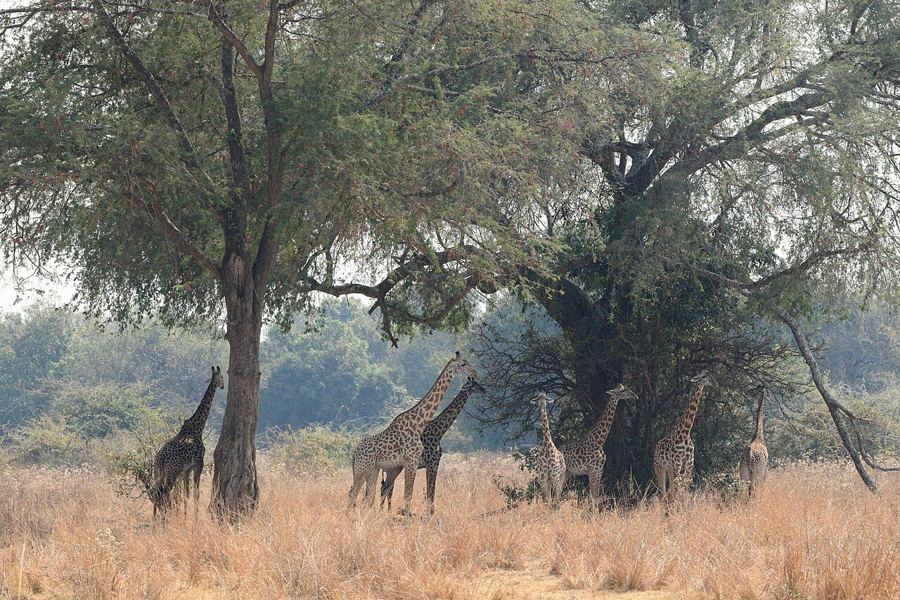
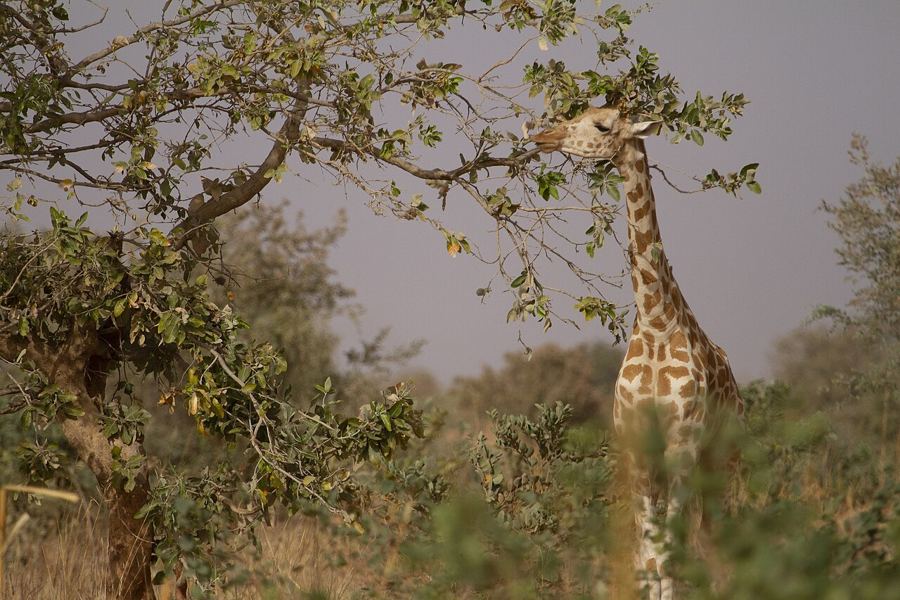
Which giraffe these are is a matter of some debate. Botswana's giraffe belong to the southern group, and studies place the animals of the north and west sometimes with the Angolan giraffe and sometimes with the South African. The split between species and subspecies is covered in four giraffe species, not one. In the field you see blotchy, rounded patches running down the legs, and the same browsing habits found across the south.
The Chobe riverfront
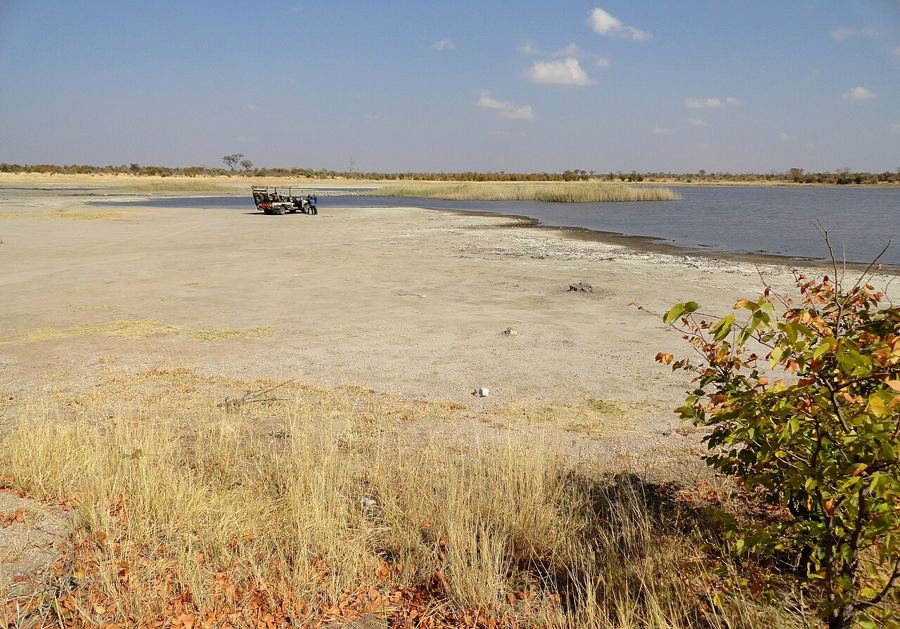
Chobe National Park's northern edge follows the Chobe River close to the town of Kasane. A sandy track runs along the riverfront, with floodplain grass on one side and thicker bush on the other. Through the dry months, from about June to October, elephants, buffalo, antelope and giraffe come down from the woodland to drink, often in the afternoon when the heat starts to ease.
Giraffe tend to approach water with care. They stand at the edge of the bush for a long time, scanning, before walking out onto the open floodplain. At the river they splay their legs and lower their necks in stages, lifting their heads at every sound. Watching a small group take its turn, one or two standing guard while the others drink, is one of the quiet pleasures of the riverfront.
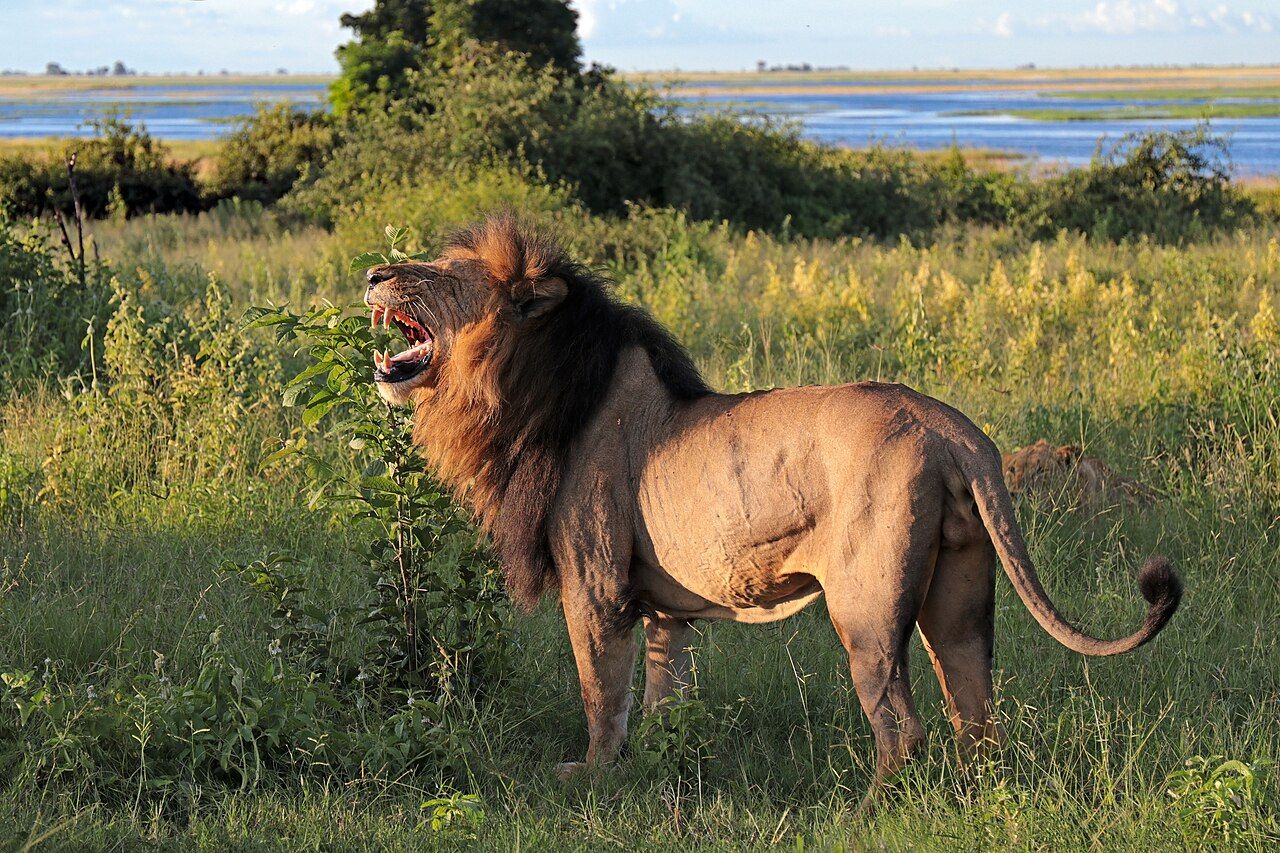
The sand on the riverfront track is deep in places, and a high-clearance four-wheel-drive vehicle is the norm. Lions and leopards hunt along this strip too, which is one reason the giraffe hesitate. Boat trips on the river in general give another view: elephants swimming, crocodiles on the banks, and giraffe silhouetted on the ridge above the floodplain.
The Okavango Delta in general
The Okavango is an inland delta, a river that fans out into the sand of the Kalahari and never reaches the sea. Its channels, lagoons and islands change size through the year. The flood usually peaks in the delta's heart in the middle of the dry season, often around June to August, though the timing and the height vary a great deal from one year to the next.
Islands in the delta range from tiny termite-mound clumps of palms to large wooded tracts. Giraffe live on the larger islands and on the drier fringes, browsing on acacia, sausage trees and other woody plants. Moremi Game Reserve covers a big part of the eastern delta and mixes dry land with permanent water.
Giraffe crossing water
Giraffe are not swimmers, and for a long time it was said they could not swim at all. What they do, often, is wade. In the delta you may see giraffe walking through shallow channels and across flooded grassland, their legs long enough to keep their bodies dry where a buffalo would be half-submerged. They pick their route carefully, testing the footing, and they avoid deep water and soft mud where a slip could be dangerous.
A crossing is usually slow. The animals pause at the edge, then move in single file, heads high, each step deliberate. Spotting one from a distance across a flooded plain, with reflections of its legs in still water, is a scene particular to this part of Africa.
Mokoro trips and walking
A mokoro is a dugout canoe, now often made of fibreglass, poled through the shallow channels by a standing poler. Mokoro trips in general take you low and silent through the reeds and papyrus, past water lilies, reed frogs and kingfishers. They are not the way to get close to large animals, and polers keep a careful distance from hippos and elephants. Giraffe, when you see them, are usually on a dry island beyond the reeds.
Guided walks are offered in some parts of the delta. Walking with a trained, armed guide changes how you see a place: tracks, droppings, the browse line on a tree where giraffe have fed. Never walk alone outside fenced areas; the delta's animals include hippos, buffalo and elephants, all of which deserve wide room.
For more on how to choose between a guided trip and driving yourself, the guide to self-drive or guided travel lays out the trade-offs.
Birds and the rest of the river
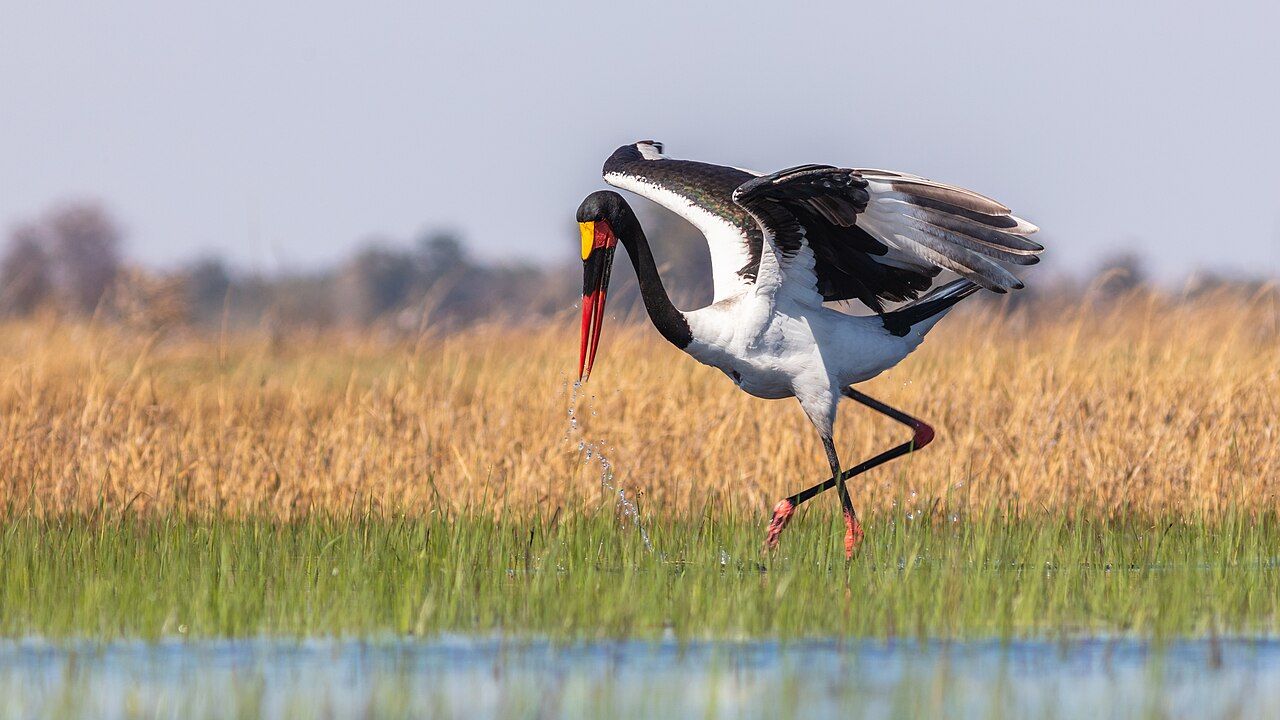
Water brings birds, and the delta and the Chobe River are rich with them. Fish eagles call from dead trees, bee-eaters nest in sandy banks, and herons and storks hunt the shallows. Wattled cranes and slaty egrets, both scarce species, turn up in the delta's wetlands.
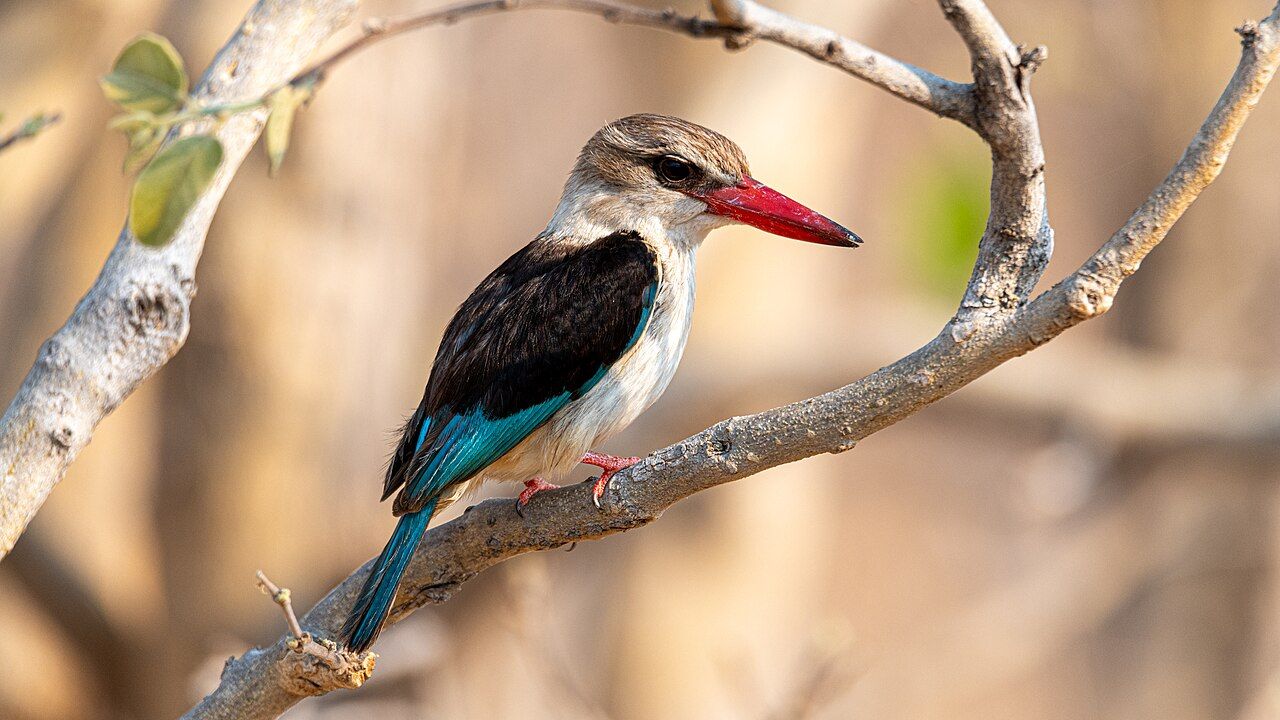
Away from the water, the woodland birds include hornbills and rollers. Many of them perch on the same acacias giraffe browse, and oxpeckers ride on the giraffe themselves, picking ticks from their necks and backs.
When to go and getting there
The dry season from about June to October is the main time for giraffe by the water. Days are warm and nights can be cold in June and July; by October the heat is fierce and the bush is bare. The rains, roughly November to March, turn the land green, bring migrant birds and newborn antelope, and spread the animals out. Some tracks become hard going, and parts of the delta are reachable only by air or boat in any season. The broader picture is in when to go for giraffe.
Kasane is the gateway to the Chobe riverfront and lies close to the borders with Zambia, Zimbabwe and Namibia, so it pairs easily with Victoria Falls or with Hwange's pans. Maun is the usual gateway to the delta and Moremi. Northern Botswana is a malaria area; talk to a doctor or travel clinic well ahead about prevention.