The West African giraffe once ranged across the Sahel, from Senegal to Lake Chad. Hunting, drought and the clearing of land pushed it back, and by the 1990s the last of them survived in a small area of south-west Niger, near the village of Kouré, south-east of the capital, Niamey. The herd had fallen to a few dozen animals, generally put at around fifty. These were the last wild West African giraffe left.
What happened next is unusual. The giraffe did not survive inside a fenced national park, but on farmland, among villages, grazing herds and millet fields. With protection and goodwill from the people who share the land with them, numbers rose steadily, and the population today is usually put at several hundred animals. The West African giraffe remains one of the rarest giraffe in Africa, but it is no longer on the edge of disappearing.
A distinct giraffe
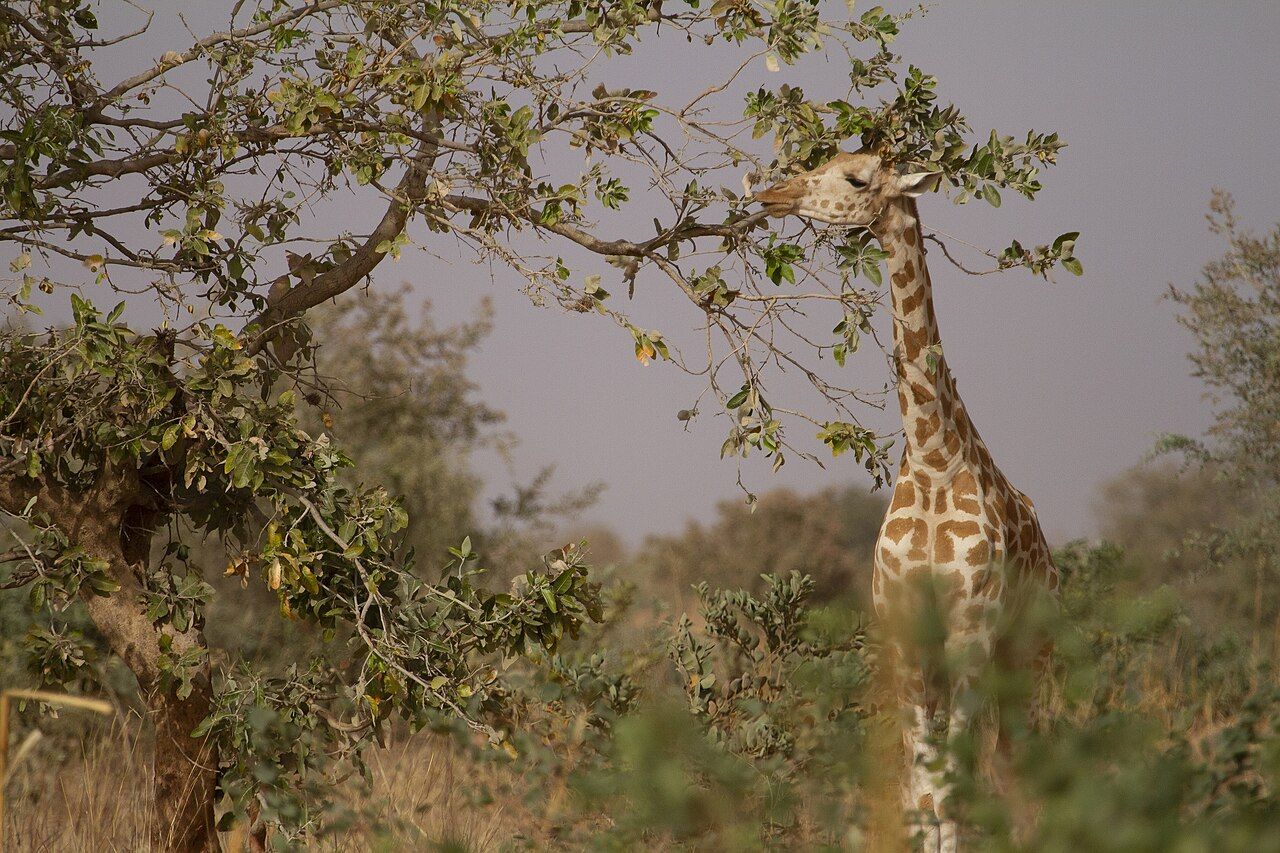
The West African giraffe is the palest of the giraffe. Its patches are light tan to orange-brown, rounded or squarish, separated by broad pale lines, and the colour fades on the lower legs. Bulls grow darker with age, but not as dark as southern or Masai bulls.
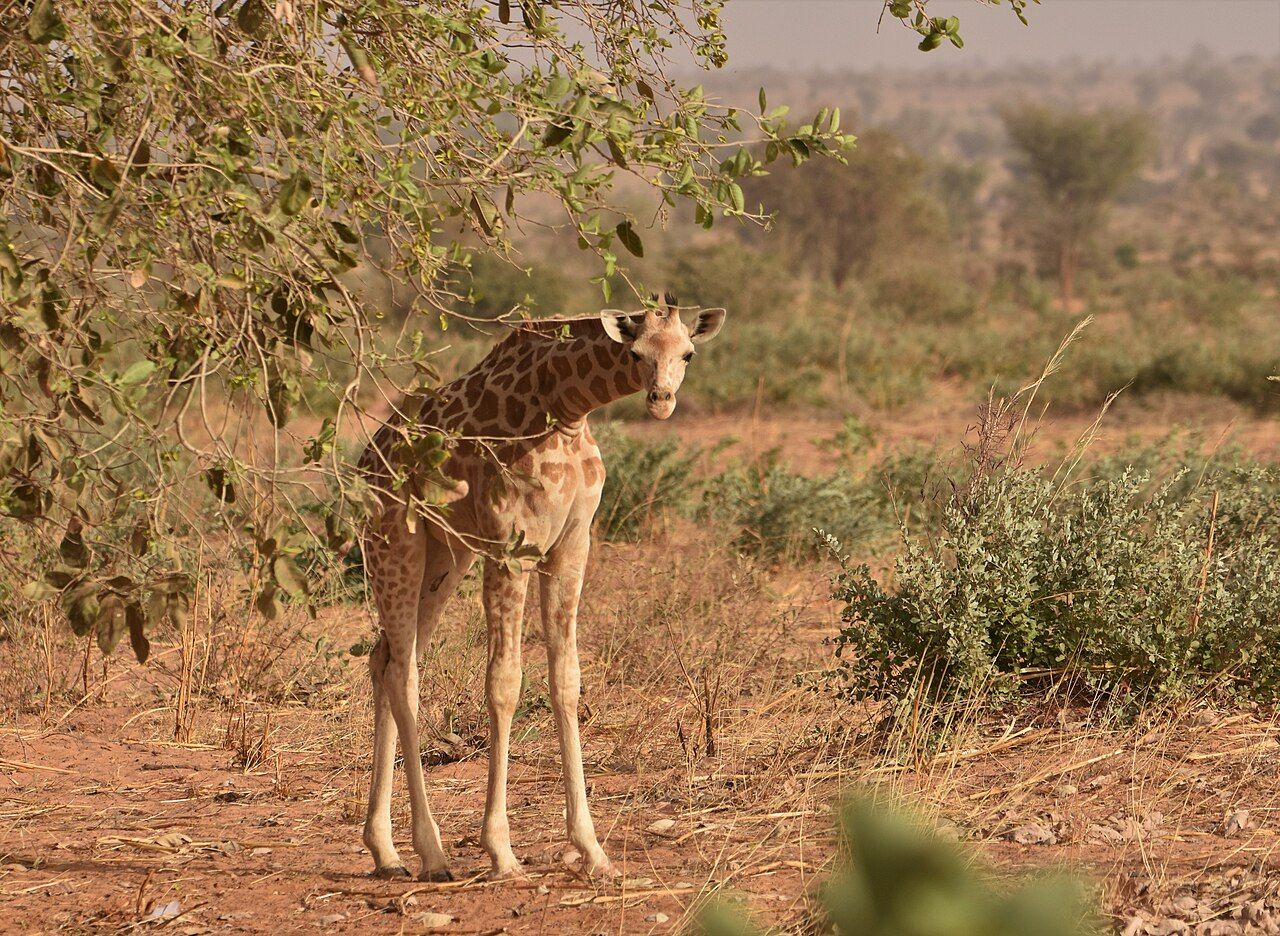
Studies since 2016 place it within the northern giraffe, alongside the Kordofan and Nubian giraffe; the IUCN still treats all giraffe as one species and lists the West African giraffe as a subspecies. The details of how the groups were split are in four giraffe species, not one.
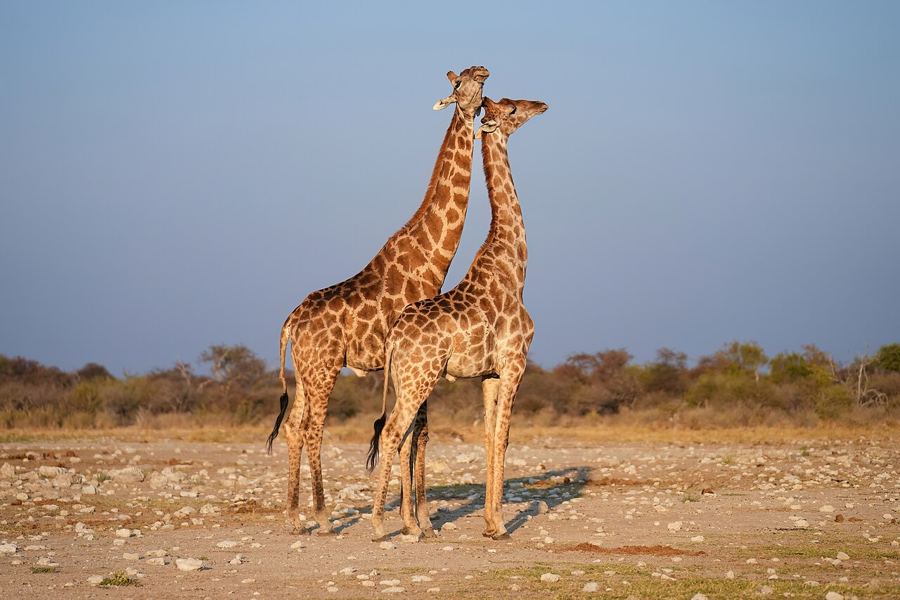
Habits here follow the year. In the wet months, when leaves are everywhere, the herd breaks into small groups that feed close to the villages and fields. As the dry season deepens and the trees on the farmland are cut back or browsed bare, the giraffe walk further, some moving east toward the Dallol Bosso valley, where the water table sits higher and trees stay green longer. Herders and farmers see them almost daily, and many families can name the season by where the giraffe are feeding. Calves are born through the year, and a mother often leaves her young one lying in the shade of a shrub while she browses nearby, returning to it through the day. Bulls spar with slow swings of the neck, as giraffe do everywhere, and the sound of two heads meeting carries a long way across quiet fields.
The giraffe zone near Kouré
The area where the giraffe live is often called the giraffe zone. It covers a stretch of plateau and valley south-east of Niamey, on and around the road toward Dosso. The plateau tops carry what is called tiger bush: bands of shrubs and small trees separated by strips of bare ground, so that from the air the land looks striped like a tiger's coat. The giraffe browse there and in the valleys, where fields, fallow land and scattered trees offer leaves and pods.
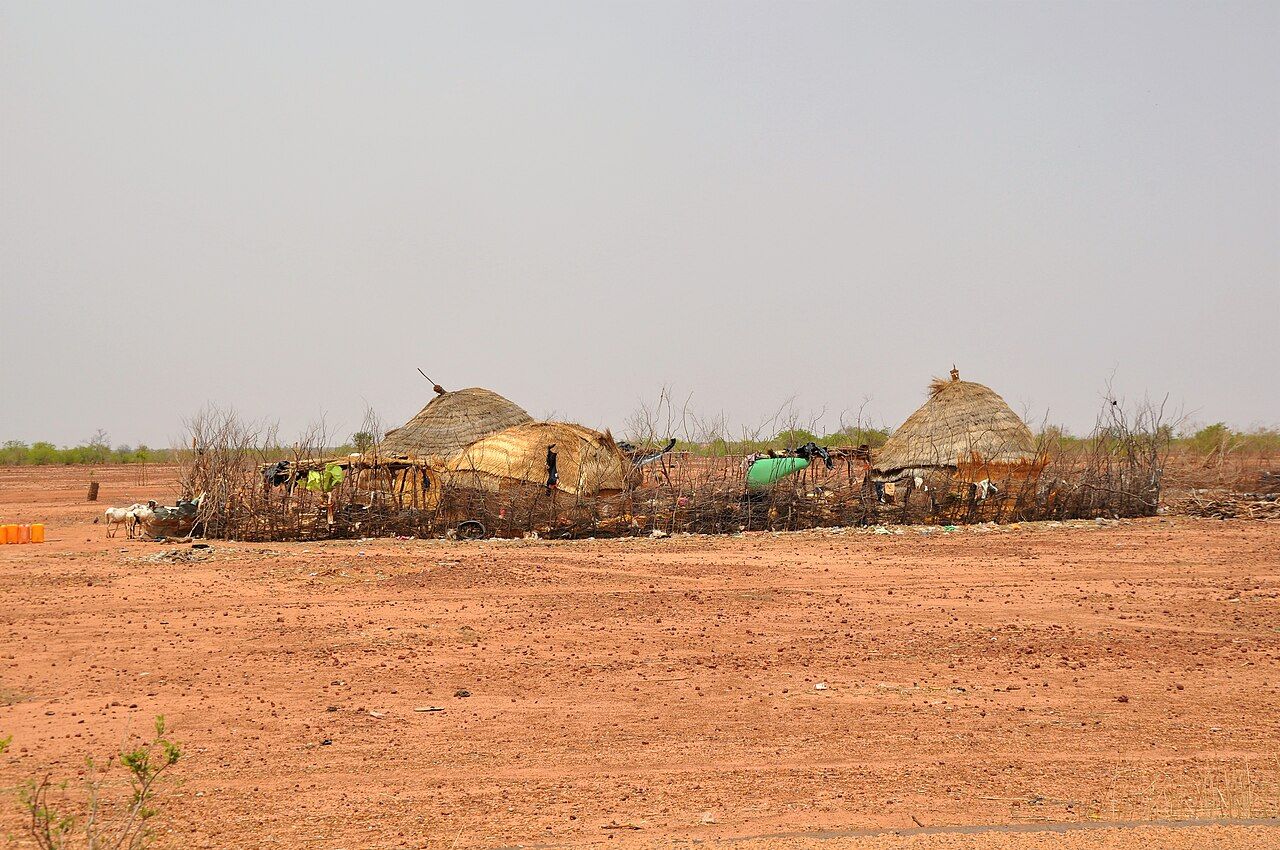
Trees matter a great deal. Combretum, acacia and other shrubs on the plateau feed the giraffe through the dry months, while trees left standing in fields give shade and browse. The rainy season, generally June to September, brings green growth to the whole area; by the end of the dry season the land is bare and dusty and the giraffe range further for food.
People and giraffe sharing land
The giraffe live among the villages of Zarma and Fulani farmers and herders. Fields of millet and sorghum, small vegetable gardens, livestock and walking paths run through their range. Giraffe browse on trees in the fields and sometimes eat crops such as beans or mango, which can cause friction. Over the years, community programmes have worked with villages on tree planting, small loans, wells, gardens and other projects meant to make living alongside giraffe more worthwhile.
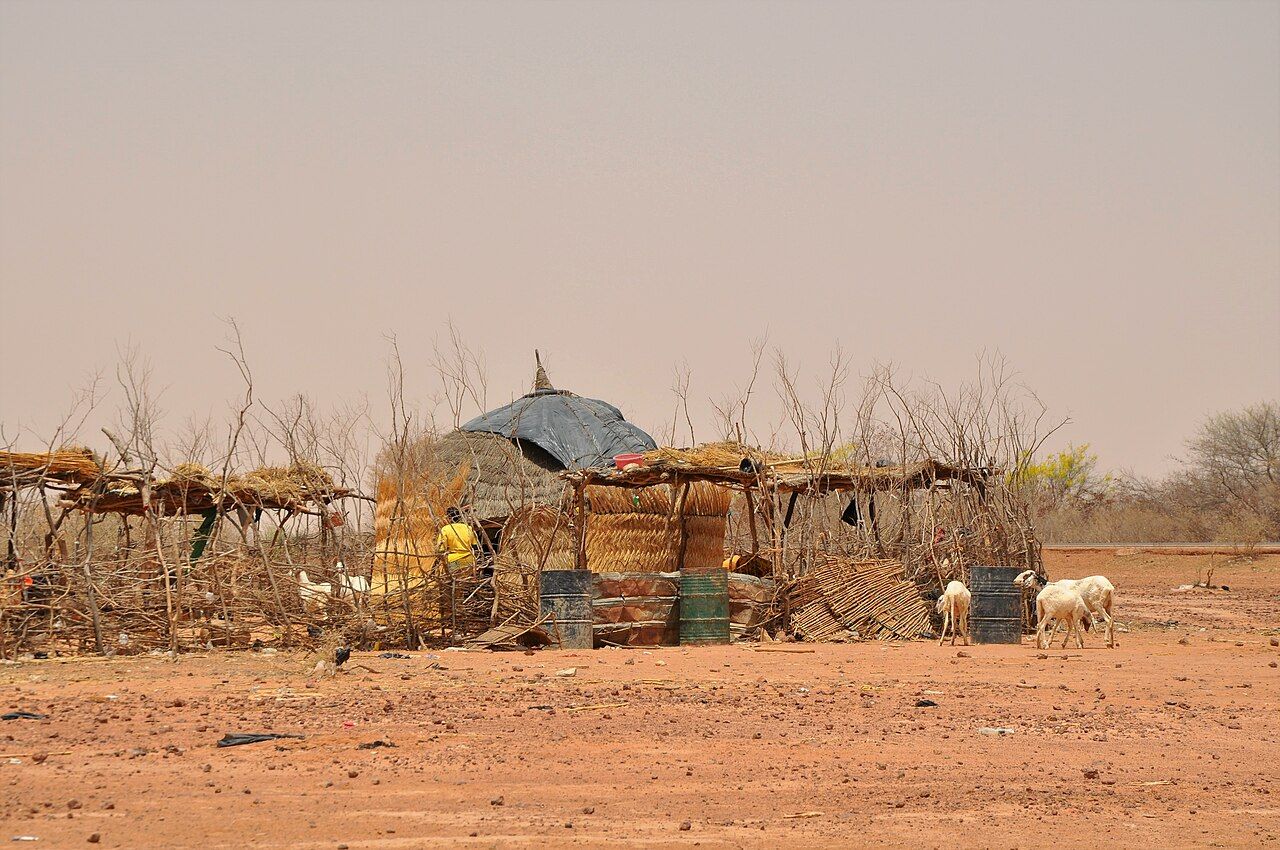
The arrangement is far from perfect. The human population is growing, and so is the pressure on trees for firewood and on land for farming. Yet the giraffe at Kouré are a reminder that big animals can survive outside parks when local people have reasons to want them there.
Yet the giraffe at Kouré are a reminder that big animals can survive outside parks when local people have reasons to want them there.
In 2018 a group of giraffe was moved from the Kouré area to the Gadabedji reserve, further east in Niger, to start a second population and spread the risk. For a wider view of how giraffe numbers fell and where they are recovering, read why giraffe numbers fell.
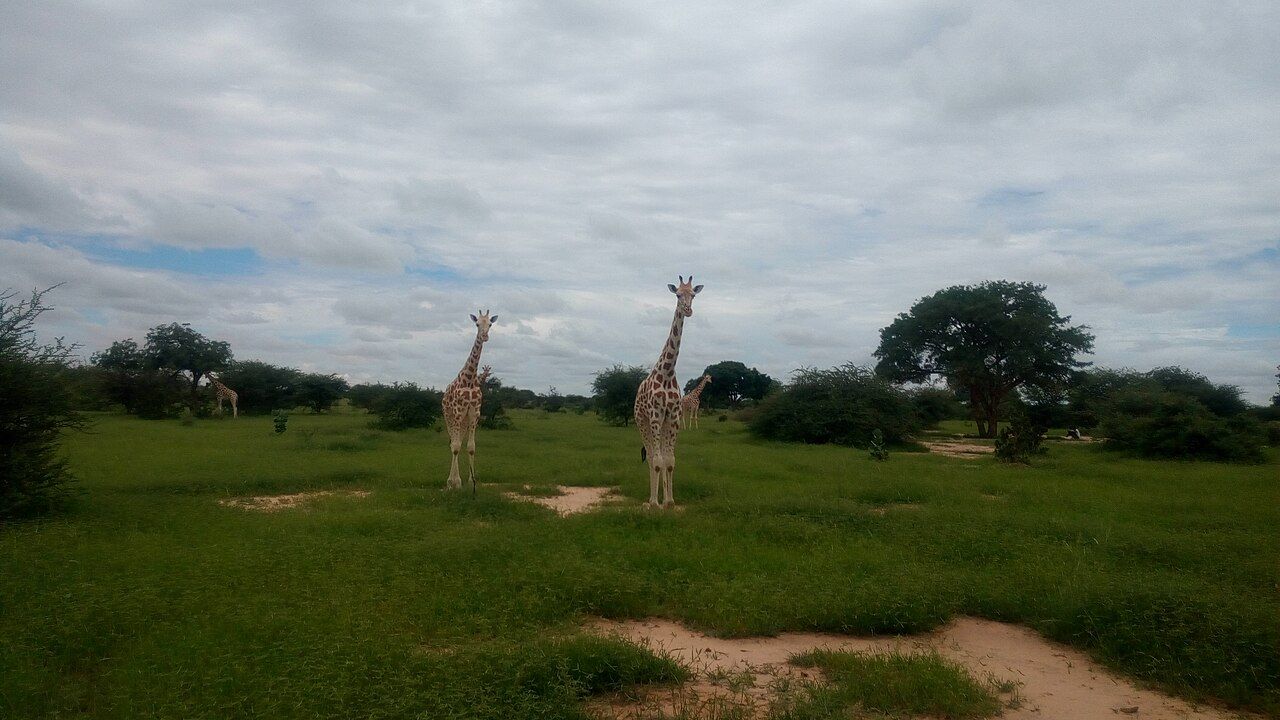
Access to this part of Niger is limited, and conditions for travellers change. Many governments advise against travel to parts or all of the country at different times.
When visits have been possible, people have gone with local guides from the Kouré area, who track the giraffe each day and know the land. Guides help you find the animals and make sure you respect fields, homes and people's privacy. You do not wander into fields, you ask before photographing anyone, and you keep a calm distance from the giraffe. They are wild animals, even when they browse a few metres from a house.
- Travel with local guides; do not go into the giraffe zone alone.
- Keep at least a respectful distance from giraffe and never feed them.
- Ask before photographing people, homes or livestock.
The cooler dry months, roughly November to February, are the most comfortable. Days are warm, nights are pleasant, and the harmattan wind may bring dust and hazy skies from the Sahara. From March to May the heat becomes intense. The rains, from about June to September, turn the land green and can make tracks muddy, and the giraffe are harder to follow in thick growth. A comparison of seasons across the continent is in dry and green seasons.
Niger is a malaria area, and yellow fever vaccination requirements apply in the region. Talk to a doctor or travel clinic well before travel, and read safari health and safety notes for general guidance.
Seeing a West African giraffe here is unlike a game drive in a big southern park. There are no paved loops or waterhole hides, only fields, villages, trees and a pale, unhurried animal that has managed, with help, to stay.