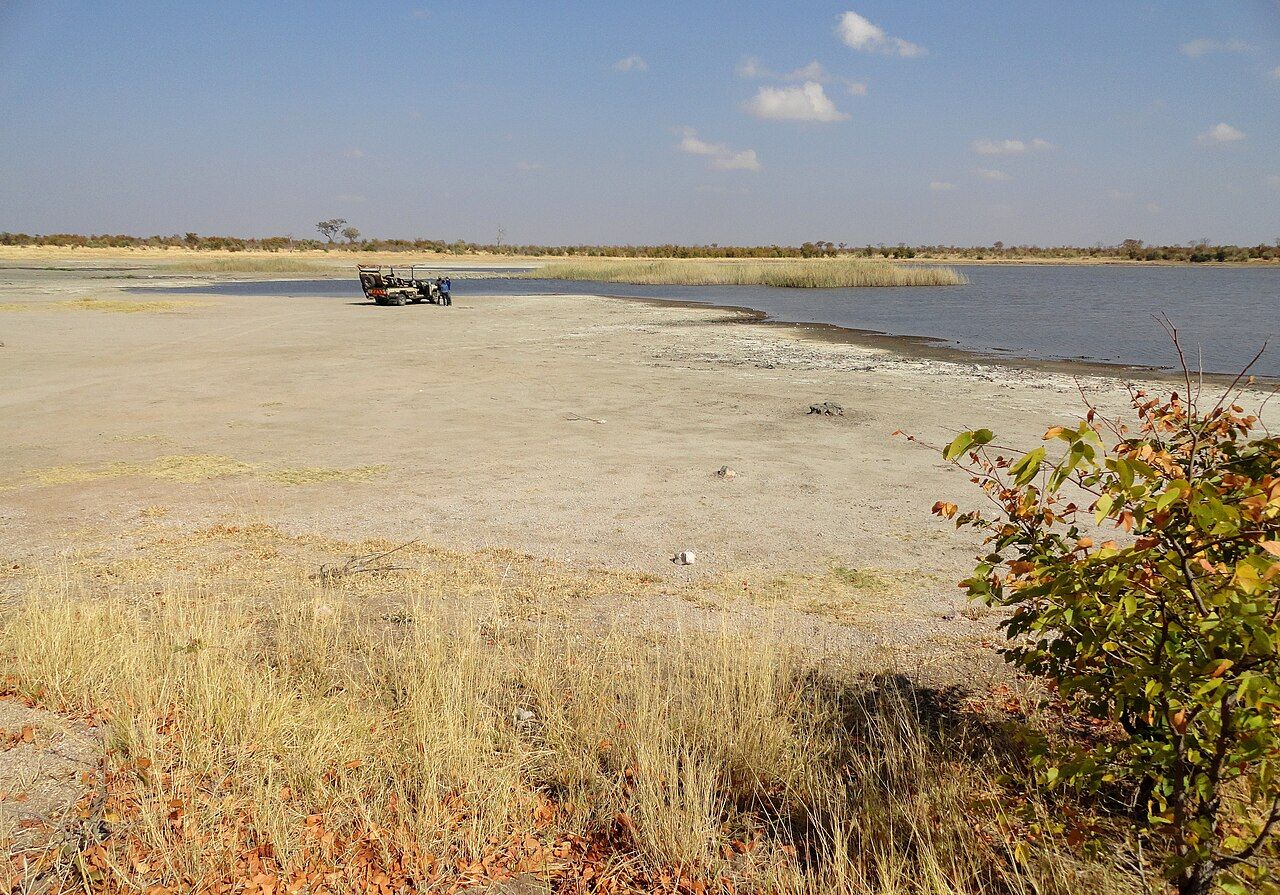
Hwange National Park covers a large tract of western Zimbabwe, along the border with Botswana, and is the country's largest national park. Most of it lies on deep, pale Kalahari sand. Rain soaks straight into the ground, and outside the wet months there are very few natural rivers or springs. What the park has instead are pans, shallow hollows that hold rainwater for a while, and a network of waterholes kept full by pumps through the dry season.
That arrangement shapes everything about how you watch animals here. In the dry months, wildlife across a huge area depends on a few dozen water points, and sitting at one of them for a few hours shows you a steady procession: elephants in great numbers, buffalo, sable, kudu, zebra, and giraffe.
Which giraffe live here
Hwange's giraffe belong to the southern group. Studies differ on exactly which subspecies they are: some place the giraffe of western Zimbabwe with the Angolan giraffe of Namibia and Botswana, others with the South African giraffe of the east. Since 2016 genetic work has proposed four giraffe species in all, while the IUCN still treats the giraffe as one species. The story is told more fully in the four species guide.
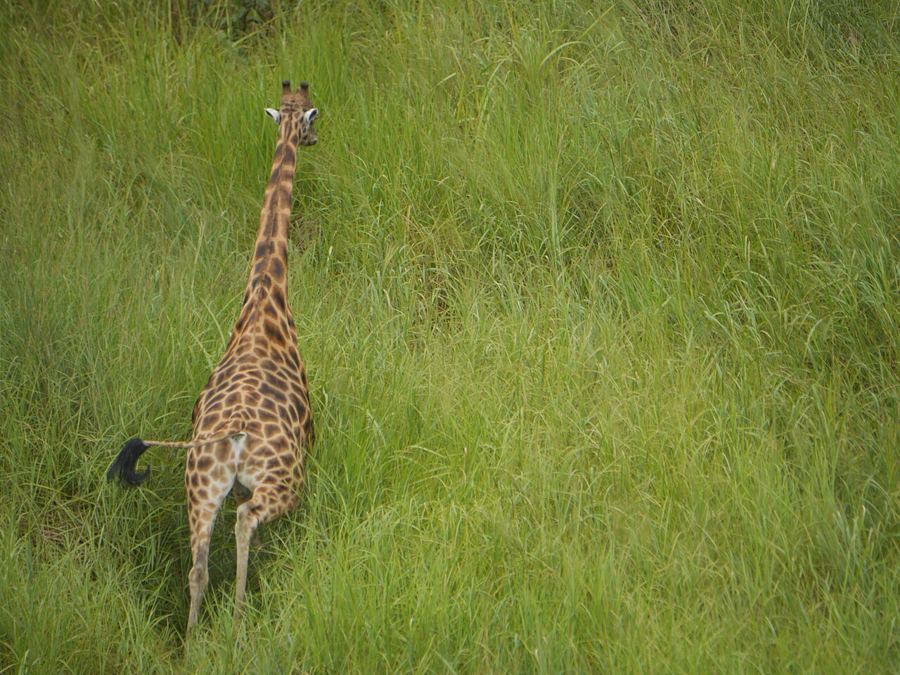
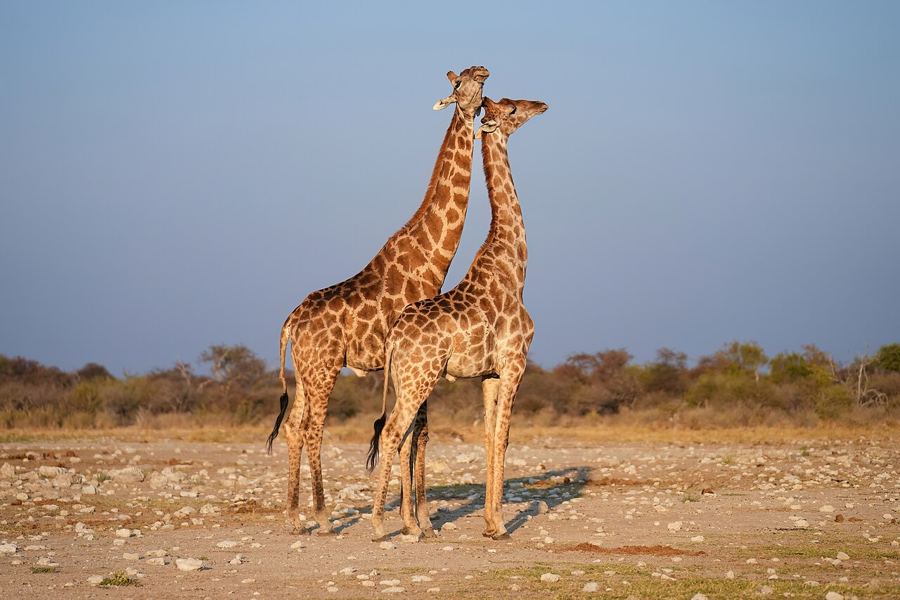
In the field, look for rounded, blotchy patches on a pale background, with the pattern reaching down to the hooves. Older bulls darken and become heavy-necked; their ossicones show bare, polished tips from fighting.
Pumped waterholes
The pumped waterholes began decades ago, when boreholes were sunk to hold game through the dry season. Diesel engines once drove most of them; in recent years many have been fitted with solar pumps, a change that conservation groups and the park authority have pushed together. Keeping water flowing is a constant job, and the number running varies from year to year.
The waterholes have side effects. Elephants gather at them in very high numbers in the late dry season, trampling the ground around and opening up woodland nearby. Other animals have to wait their turn or come at quieter times. Giraffe tend to drink when the elephants are not crowding the pan, often in the middle of the day or the late afternoon. They come out of the trees, stop, look for a long time, and then walk out across the open ground.
Teak woodland and open vlei
Hwange is not open savanna like the Serengeti. Much of it is woodland: Zambezi teak on the deep sand, mopane on heavier soils, and mixed bush with acacias, terminalia and combretum. Between the wooded areas lie open vleis, grassy hollows that may hold water in the rains and stay green longer than the surrounding land.
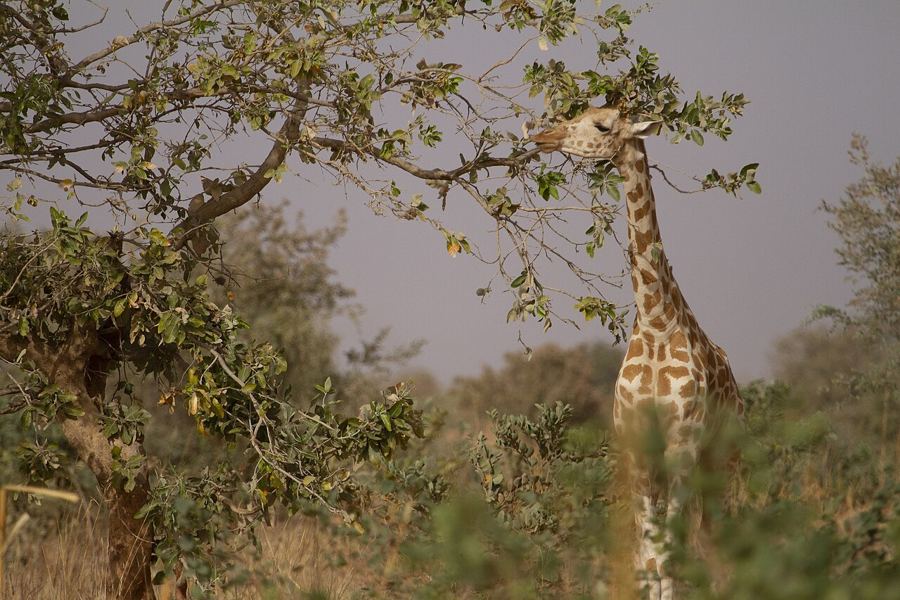
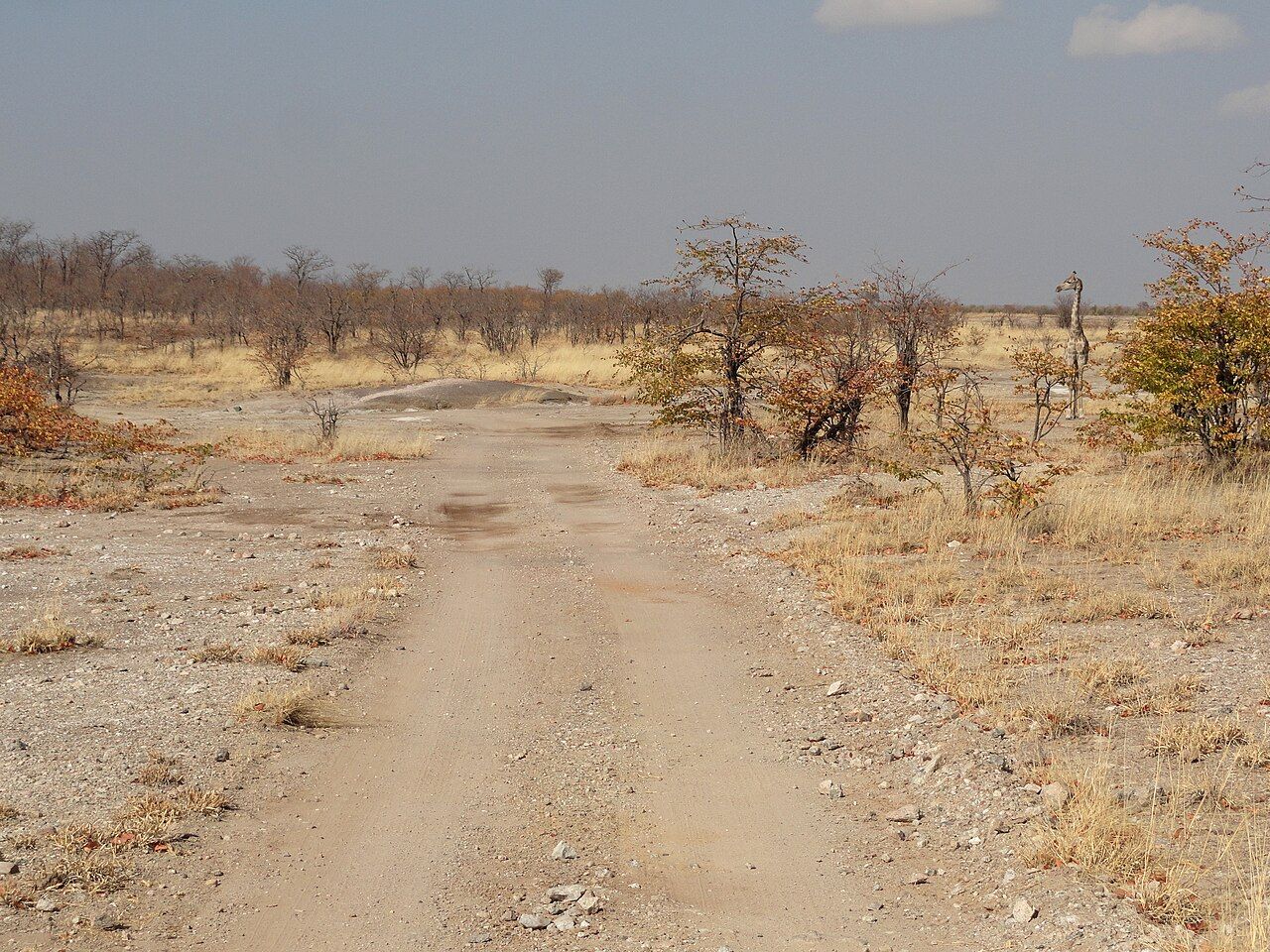
Giraffe browse in the woodland and along its edges, and they cross the vleis to reach water. On a drive you often see them first as a head above the trees, or a dark neck moving against the grey trunks of teak. The open vlei edges are the easiest places to watch them feed at leisure.
The park is also known for its large herds of buffalo, for sable and roan antelope, for lions and for wild dogs. Birds of prey are plentiful: bateleurs, tawny eagles and vultures over the pans.
The Main Camp area
The north-eastern corner of the park, around Main Camp, is the most visited part of Hwange. It lies close to the main road between Victoria Falls and Bulawayo, and a network of roads links several pans and waterholes within a morning's drive. Some of these have viewing platforms or hides where you can leave your vehicle under the park's rules, and these are excellent places for watching giraffe come to drink at their own pace.
The roads near Main Camp are mostly gravel and sand, and many can be driven in an ordinary vehicle in the dry season, while further south and west the sand deepens and a four-wheel-drive vehicle becomes necessary. Remote areas are generally best visited with a guide. For more on choosing between the two, read self-drive or guided.
Seasons and timing
The dry season, from roughly May to October, is when the waterholes matter most and when sightings come most easily. August to October is the peak, with large concentrations at the pans, warm to very hot days and dust in the air. Mornings in June and July can be cold, close to freezing in open vehicles, so bring a warm jacket.
The rains usually arrive in November and run to March. The bush turns green, natural pans fill, and animals spread across the park, away from the pumped water. It is a fine time for birds and for young animals, though some roads become difficult. The guide to giraffe seasons compares this pattern with East Africa's.
Hwange is easy to combine with Victoria Falls, a few hours' drive to the north, and with the Chobe area of Botswana. Malaria is present, especially in the rainy months, so talk to a doctor or travel clinic before travelling.
Keep to the park rules: stay in your vehicle except at designated places, keep to the roads, never feed animals, and be at your accommodation by the closing time. At a busy pan, switch off the engine, keep your voice low, and leave space for animals to come and go. Giraffe are wary drinkers, and the quieter the edge of the pan, the more likely they are to step out of the trees.
Patience pays most in the last hour of light. As the heat fades, animals that have waited in the woodland all afternoon walk out to drink, and the pan fills with movement, dust and long shadows.